
Your AI Project Looks 90% Finished. It’s Closer to Half

AI coding tools build fast prototypes. But the gap between demo complete and commercially scalable is bigger than it looks. A framework for planning around it.
Recently, a friend posted on LinkedIn about AI coding, and it resonated. She’s been building a product with AI coding tools and posted about the experience. The gist was simple: AI got her to a working prototype in days instead of months. She was thrilled. And frustrated. The interface looked polished, the workflows made sense, and everything seemed to be coming together fast.
That’s not what the post was about. Listen carefully; yes, that’s the sound you hear when the other shoe drops. The remaining work, the part that would take the product from an Alpha to an MVP, was taking longer than everything that came before it. Combined.
I was close to this issue because I’d lived it myself. A project I was building last year hit the same wall. The tool I used generated a functional interface in an afternoon. I was basically done. Or so I thought. After being completely done, I spent another month continuing to work on it, each time being done until recognizing there was still more to do. These enhancements were on everything the interface didn’t show.
This isn’t a complaint about AI tools. They’re remarkable. But there’s a trap inside that speed, and every business owner building with AI or hiring someone who is needs to see it clearly before they commit a budget or a timeline. My friend is working through this process as I write this. Many business owners don’t realize how much there’s left to do after that initial “I’m practically done” feeling.
Why AI Projects Look Faster Than They Are
AI coding tools are fast at producing the visible parts of a product. If you need a working interface and standard page layouts, the current generation of tools can build those in hours. Add basic data structures and a clickable prototype, and you’re looking at days, not months.
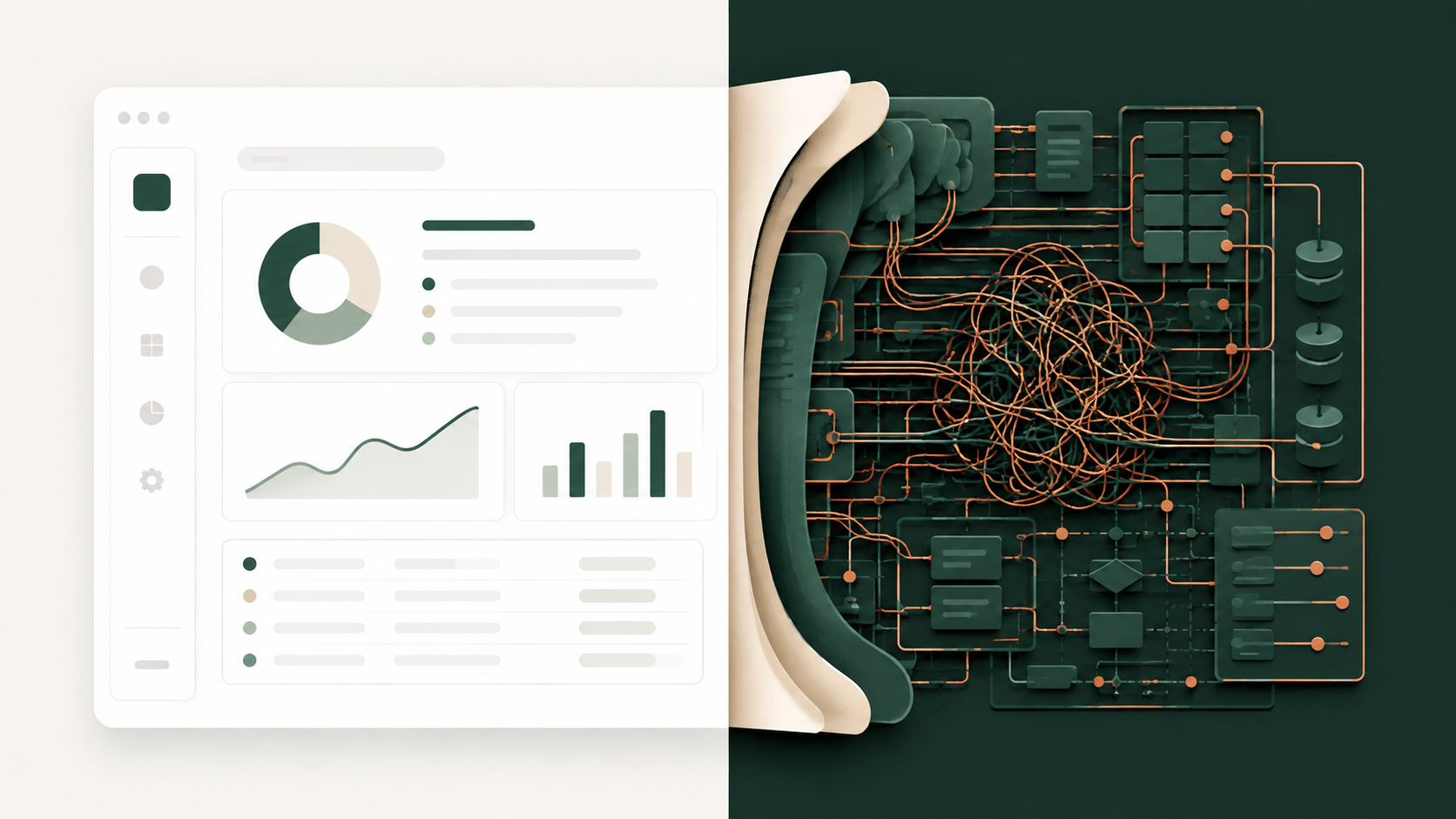
That speed is real. A Microsoft Research team gave developers a straightforward coding task: build a server from scratch with no existing codebase underneath. The group using AI finished roughly 56% faster. For a clean, defined task with clear boundaries, the acceleration is measurable and significant.
The problem is what that speed makes you believe.
When you see a working interface on your screen, your brain does something natural. It estimates progress. And it estimates high. The visual completeness of the product creates a sense that you’re nearly done, that the finish line is right there.
You’re not.
Where the Hard Work Actually Lives
What my friend ran into, and what I’ve watched others discover the hard way, is the

30+ years of research strategy on projects for Oracle, Cisco, PayPal, and Walmart — now helping small businesses adopt AI that actually delivers.
More about George →Keep reading

AI is eroding the two things associations have always sold: information and credentials. The ones that survive will use AI to rebuild value, not automate admin.
Labor Day was created to honor human work. In 2026, AI handles the busywork. Here is what to automate and what to protect.
Small businesses have no line item for AI. Costs are scattered across credit cards, subscriptions, and bundled software tiers. A guide to building your first AI budget.