AI Will Plan Your Holiday Party. It Might Also Ruin It.
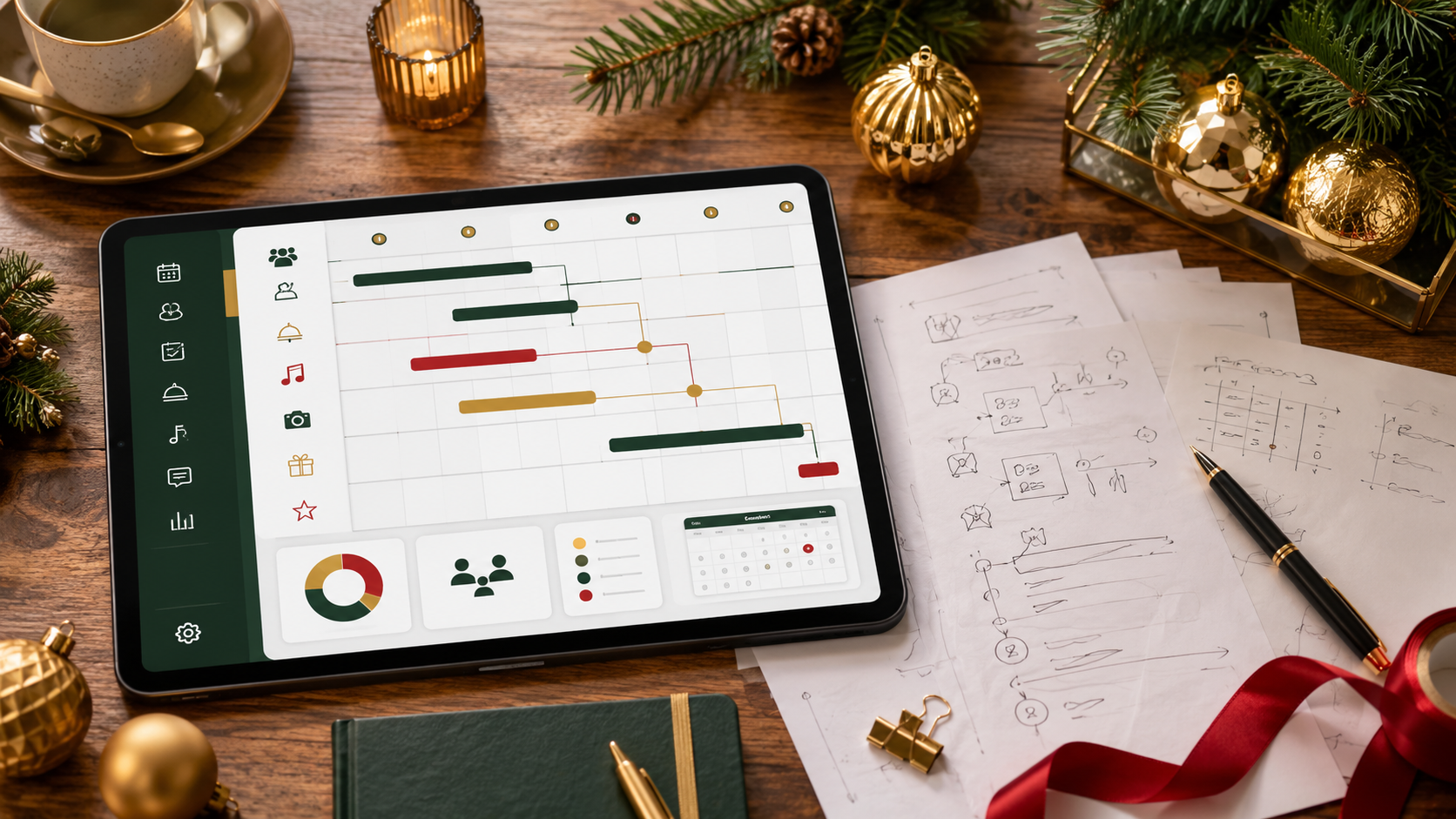
What happens when you hand a holiday party brief to AI? The budget and timeline are good. The venue and menu recommendations need a human. A practical walkthrough.
If you’ve ever watched The Office, you remember the party planning committee. Angela Martin presiding over the Christmas party with the quiet fury of someone who believes streamers are a moral failing. Phyllis angling for control. The negotiations over music, food, and whether karaoke counts as a team-building activity. The entire subplot worked because every person who has worked in an office recognized the dynamic. Party planning at work is politics, logistics, and emotional labor wrapped in a question nobody wants to own: whose job is this?
For small business owners, the answer is almost always: yours. You don’t have an HR department. You don’t have an Angela (which might be a blessing). You might have a well-meaning employee who volunteers and then sends you increasingly panicked texts about venue deposits and vegetarian options. Or you do it yourself, which means the party sits on top of everything else you’re already doing.
The thought experiment goes like this. What if you handed the entire planning brief to an AI model and let it do the work? Not the decisions. The work. The research, the budgeting, the drafting, the scheduling, the follow-up. Everything that takes time but doesn’t require your judgment about your people.
The results are surprisingly useful in some areas and dangerously wrong in others. Both parts matter. I tested this workflow with a realistic holiday party scenario to see where AI adds value and where it creates risk. What follows is what came back, what worked, what didn’t, and what you should check before trusting any of it.
The Brief
The scenario is one most small business owners will recognize. You run a company with 35 employees. The holiday party is four weeks out. Your budget is a few thousand dollars, total, for everything. You need a local venue, a menu that handles dietary restrictions, a location that’s genuinely accessible, activities that don’t make anyone uncomfortable, and invitations that go out in time for people to plan around them.
That’s not a hypothetical designed to make AI look good. That’s the actual brief most owners face every November, except most owners face it while also running payroll and managing a project backlog.
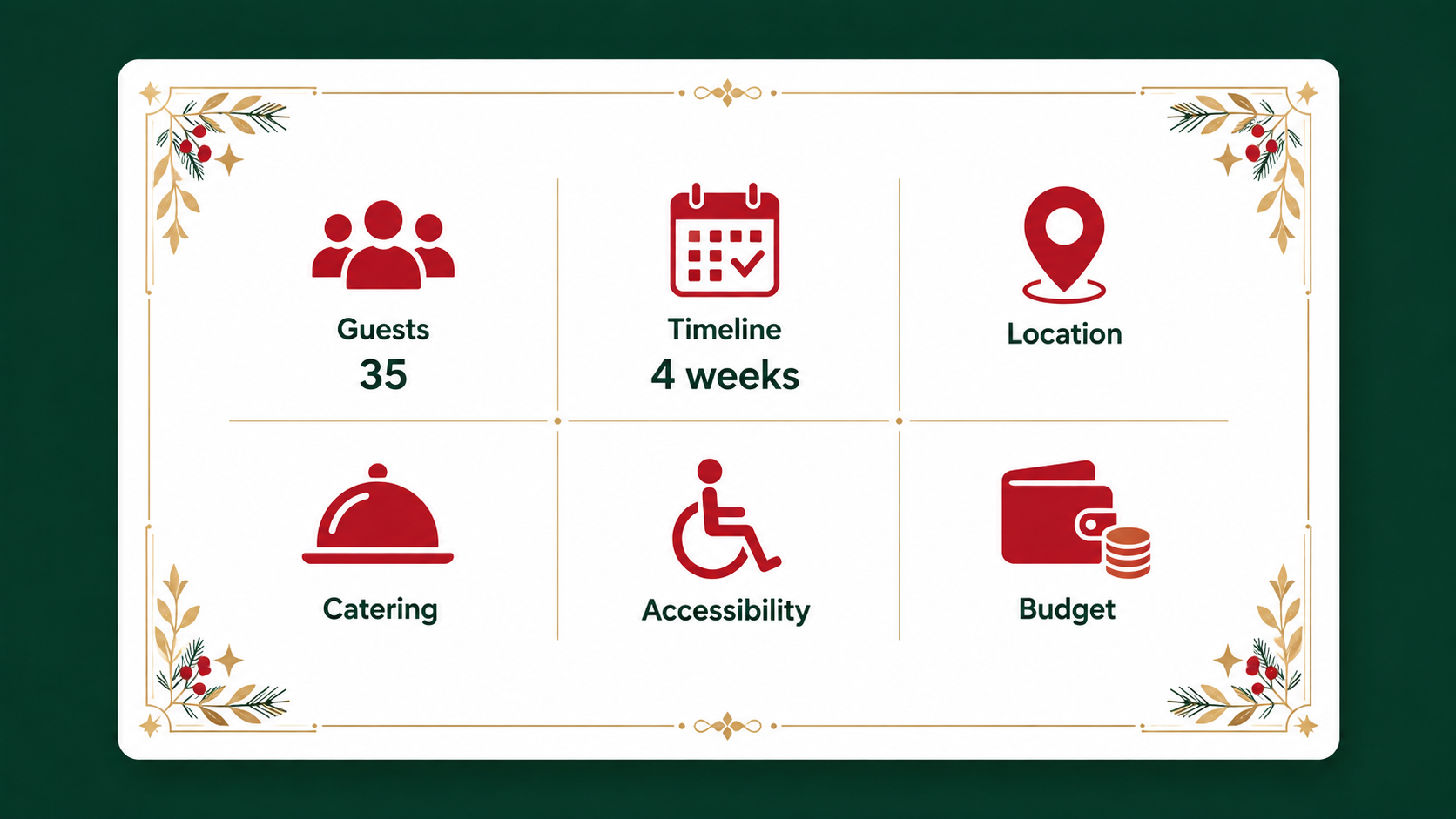
Hand that brief to a current-generation AI model (ChatGPT or Claude will both handle this well) and ask for three event concepts, a preliminary budget, a planning timeline, and a venue-evaluation checklist. What comes back looks remarkably like a professional event plan. It arrives in about two minutes.
What AI Gets Right
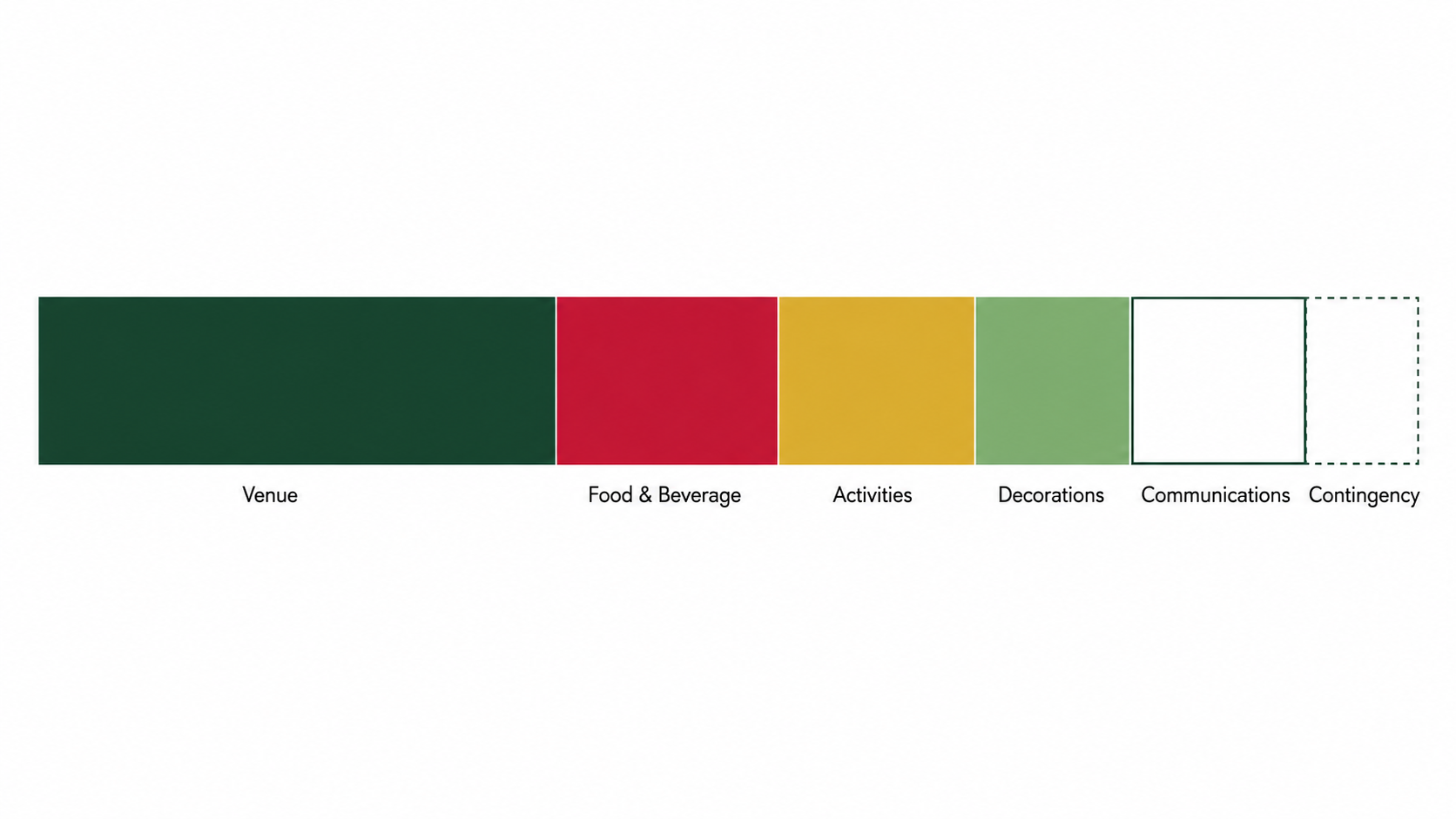
The three event concepts will typically span a range. A seated dinner at a local restaurant. A casual gathering in a rented event space with catering. Something more creative: a cooking class, a bowling night, a holiday market outing. Each concept comes with a rough budget breakdown covering the major categories.
The budget breakdown is where AI earns its keep. It catches categories you’d probably forget. It reminds you to account for gratuity and adds a line for parking validation. The contingency reserve for last-minute changes is the kind of item most owners skip and then regret in the final week. The AI won’t know what anything costs in your specific area (that’s a critical limitation I’ll come back to), but the framework it produces is more complete than what most people would draft from scratch.
The timeline is similarly strong. Four weeks out: venue confirmed. Three weeks: menu locked. Two weeks: invitations distributed. One week: final headcount to the venue. Day of: setup logistics. The scaffolding saves you from the missed step that turns into a crisis.
Communications drafting is the biggest time saver. Ask the AI to write the invitation, the RSVP reminder, the dietary restriction survey, the day-of logistics email, and the post-event thank you. In 20 minutes you’ll have a complete communications set that would have taken an afternoon to write from scratch. Every message needs a pass for tone (AI tends to run formal and slightly corporate), but editing is faster than drafting.
RSVP tracking is another win. Ask the AI to draft a three-message sequence: initial invitation with an RSVP link, a reminder for non-responders at the two-week mark, and a final nudge three days before the headcount deadline. Then ask it to generate a short FAQ covering parking and dress code, plus-one policy, and what to do if dietary needs weren’t captured in the original survey. That FAQ alone prevents a dozen one-off emails from employees who all have the same four questions.
The venue-evaluation checklist is the output that surprised me most when I tested this workflow. The AI generates a comparison framework that covers capacity and pricing structure, catering options, parking, public transit access, ADA compliance, noise restrictions, and cancellation terms. It’s the kind of checklist an experienced event planner would build, produced in seconds. You still have to call the venues yourself. But you’ll ask better questions when you do.

30+ years of research strategy on projects for Oracle, Cisco, PayPal, and Walmart — now helping small businesses adopt AI that actually delivers.
More about George →Keep reading

The price of AI at small-business volume barely moved in a year. The cheapest models got much better. Five workflows now worth automating, and what they still need from you.

AI renders faster and drafts proposals in minutes. But building codes, site conditions, professional liability, and field decisions remain structural limits no model handles.

Only 43% of associations can access their own member data. AI cannot fix what it cannot see. A practical guide to fixing the data foundation before buying AI features.