
Welcome to Galyx: AI Guidance for Small Business Owners

Galyx.com: AI Guidance for Small Business. AI isn't just for companies with big budgets. It takes away mundane tasks so you can spend your time on your business.
More than thirty years. That’s how long I’ve been in the business technology trenches helping companies automate repetitive tasks, untangle the complicated, and find growth in places they didn’t think to look. I’ve worked my way through the introduction of PCs to database wars, past the widespread use of the internet, through mobile devices measured in pounds to ounces, apps, and now AI. Every one of these has been fascinating in its own way. I’ve been on the leading edge and on the bleeding edge. Through this journey, I’ve never been as impressed with the sheer speed of innovation as we’re experiencing right now.
Always a champion of small business, I decided to focus attention on this segment of our economy. While continuing as CEO of Naviscent, my user research consulting firm, I started Galyx. Most of what’s written about AI for small businesses is either painfully basic or buried in technical language that assumes you have an IT department. There’s so much of it that it’s hard to know where to get guidance from if you’re a business owner without a dedicated technology team. This blog exists to fix that.
I know contractors who can’t find time to send invoices, retailers losing sales to competitors they’d never heard of six months earlier, and service businesses drowning in administrative work while their best opportunities walked out the door. AI can help with every one of those problems. But only if someone translates the technology into decisions that make sense for a business your size.
What Galyx Actually Is (and Isn't)
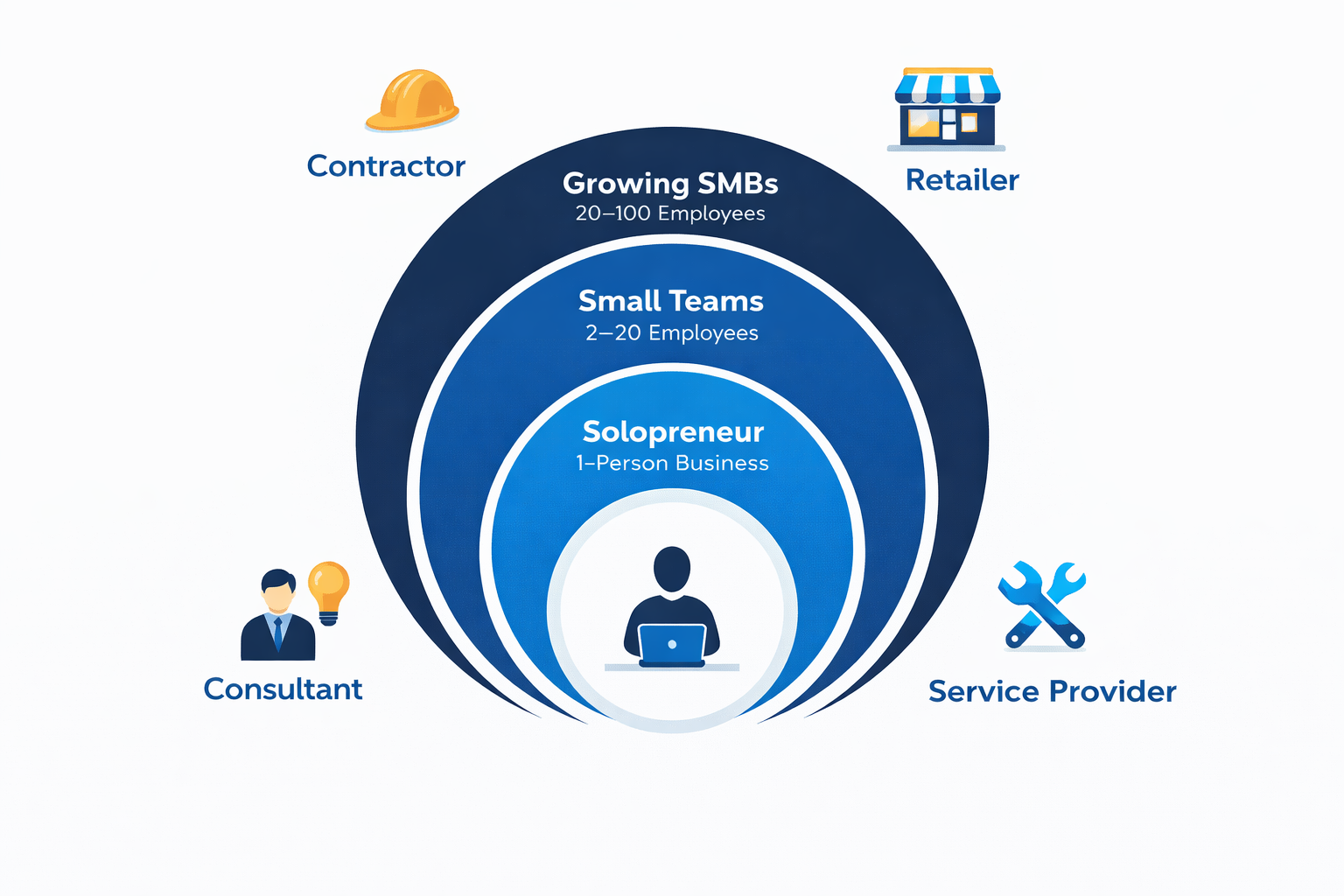
Galyx is an AI guidance resource for small business owners. We offer consulting services to the SMB community and provide guidance and tools to help them on this journey. It’s not for developers, enterprise IT teams, or people with six-figure software budgets. If you’re running a business with under 150 employees or you’re a solopreneur and you’re trying to figure out where AI can help, this is where you come to think through that.
I’ve spent three decades working at the intersection of business technology, research, automation, SEO, email marketing, and social media, first building my own businesses, then advising others. What I’ve learned is that most small business owners don’t fail at AI because of the state of technology. They fail because no one translated it for them in plain language.
The gap isn’t between big companies and small ones. It’s between businesses that have someone explaining this clearly, and businesses that don’t. Galyx is that someone.
Here’s what we’re not: another generic tech blog that reposts press releases and product announcements. We don’t have a “sponsored by” section. I’ll call out trends, solutions, and alternatives, whether because of capabilities, budget, or technological reasons. When something doesn’t work, I’ll say so. When a trend is overhyped, I’ll explain why.

Here's what we're not: another generic tech blog that reposts press releases and product announcements. We don't have a "sponsored by" section. I'll say it as I see it. We will call out trends, solutions, and alternatives, whether because of capabilities, budget, or technological reasons.
Why AI Guidance for Small Business Matters Right Now
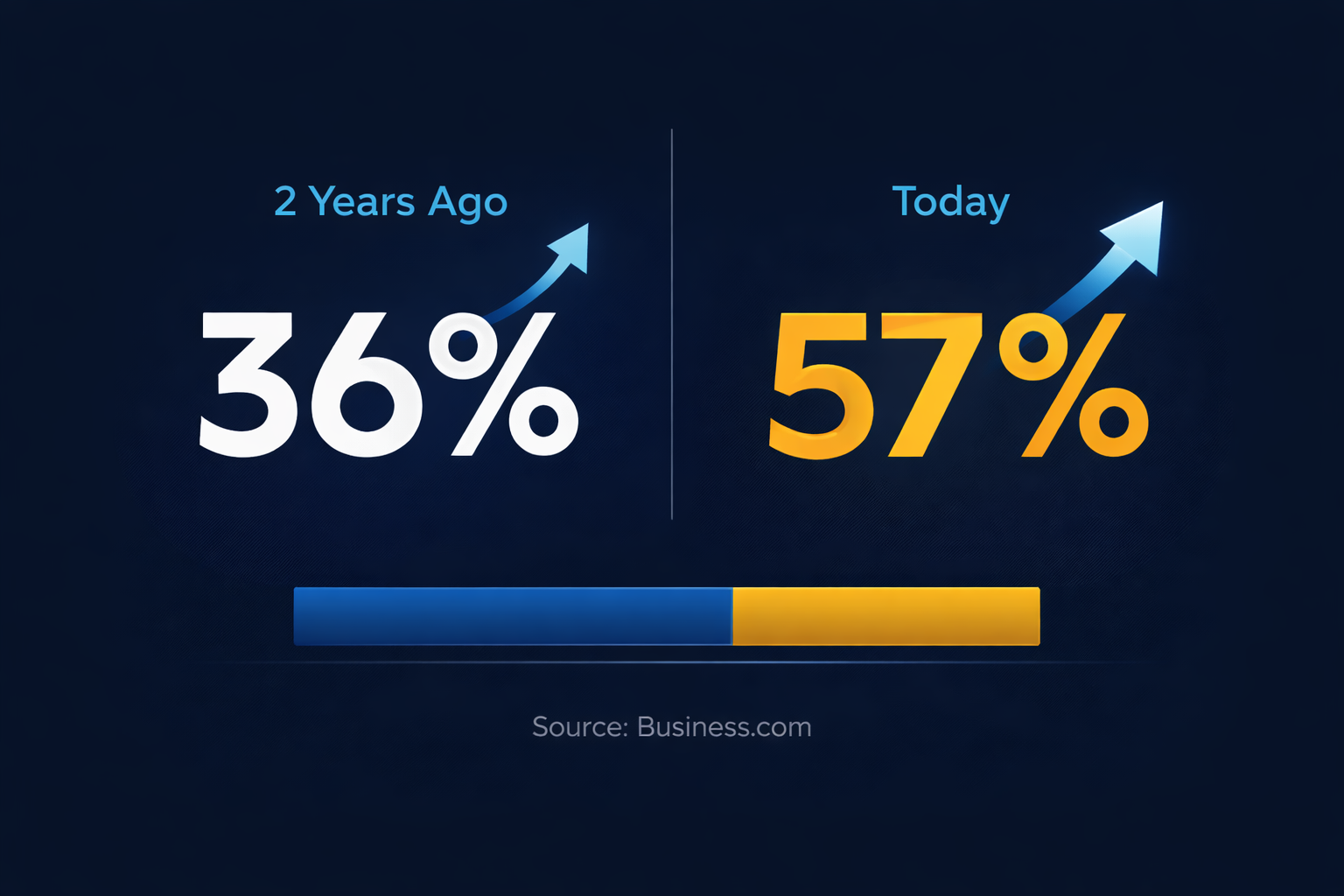
The pace of small business AI adoption caught even me off guard. Goldman Sachs surveyed more than 1,200 small businesses in early 2026 and found 76% are now using AI in some form. That’s up from numbers that were below 50% just two years ago. And 93% of those users report a positive impact.
That’s the good news. Here’s the problem hiding behind those numbers. Only 14% have AI fully embedded in their core operations, according to the same Goldman Sachs study. About half of AI-using small businesses haven’t invested anything in training or integration. Most are using AI for content creation, writing social captions, drafting emails, maybe generating a blog post. That’s fine. It’s a start. But it’s barely scratching the surface.
Companies seeing real changes in revenue growth, cost reduction, and time savings are using AI to automate their back office, qualify and follow up on leads automatically, personalize customer outreach at scale, and make faster decisions with better data. Those applications are available to a five-person landscaping company just as much as they are to a 150-person consulting firm. Most small business owners haven’t been shown how.
That’s the gap this blog fills.
The Book: Smart AI for Small Business
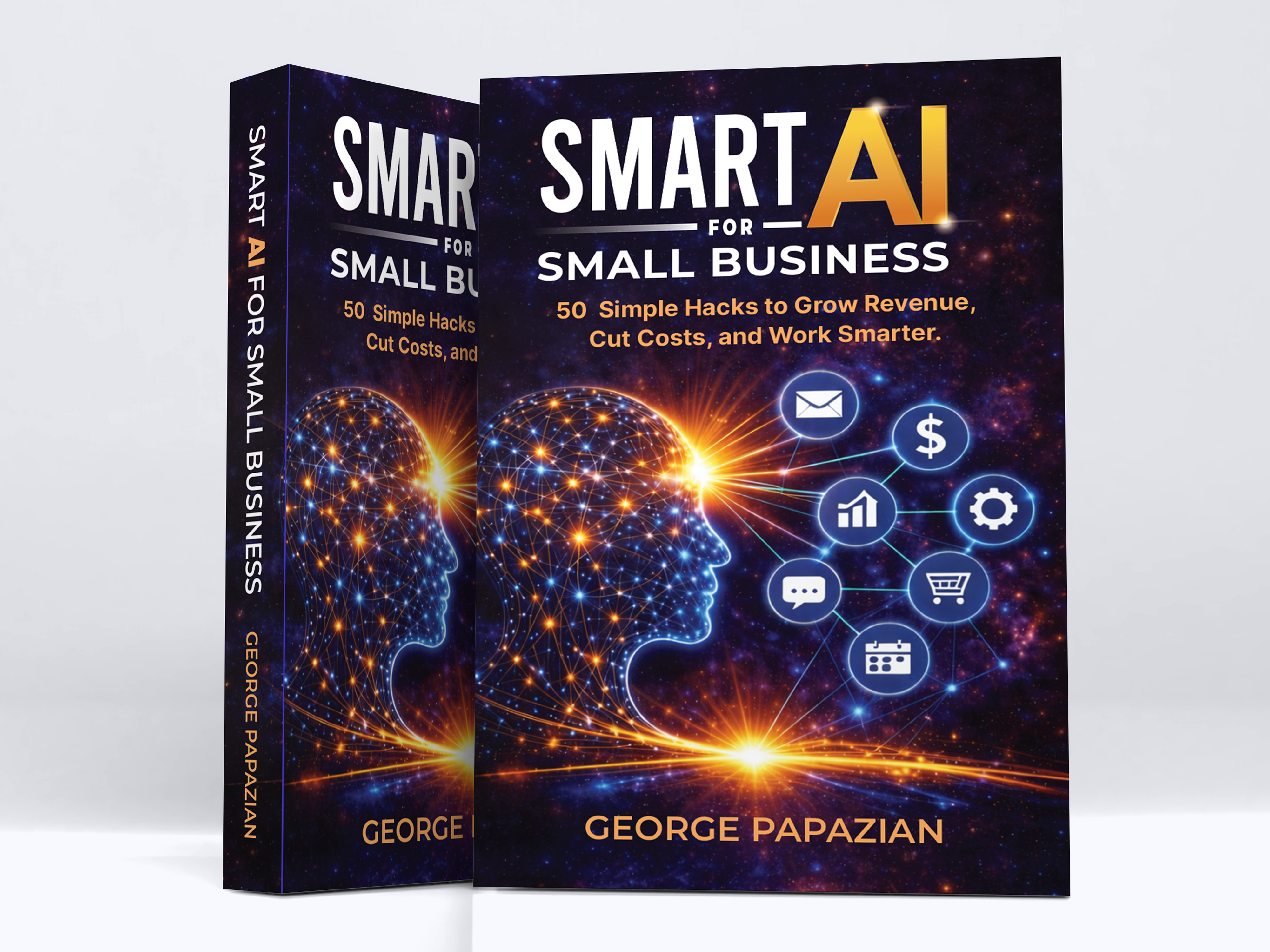
Alongside this blog, I’m releasing my book, Smart AI for Small Business: 50 Simple Hacks to Grow Revenue, Cut Costs, and Work Smarter. Here’s what’s in it.
50 practical, tested ideas organized by business function: sales, marketing, operations, finance, human resources, and customer support. Each one is designed to be implementable by a non-technical person in under a day. No IT team required. Most are low-cost or free.
A few examples of what’s inside:
• A simple AI setup that qualifies inbound leads automatically, so your first call is with someone who’s already half-sold
• How to automate your social media planning in a way that stays true to your actual voice, not a robotic approximation of it
• A background workflow that handles routine customer follow-ups, appointment reminders, and invoice nudges without you touching a thing
• Ways to use AI for financial forecasting that don’t require an accountant or a finance degree
Stay tuned at Galyx.com for details on availability. There’s a place to sign up for more information when the book is available.
What This Blog Covers
The short version: anything that helps a small business owner make better decisions about AI. That includes:
• Practical AI tips you can use this week, not theoretical frameworks
• Tool comparisons written for non-technical readers: what’s worth the money, what’s overhyped, and what’s genuinely changed
• Real-world scenarios from businesses like yours: what they tried, what worked, and what failed
• AI trends filtered for what matters to businesses under 150 employees, not enterprises
• The hard questions nobody else is asking, like who gets hurt when AI detection tools have a documented bias problem
Posts go up regularly. If there’s nothing useful to say in a given week, I’ll skip it. If there’s lots to say, I’ll put on a pot of coffee and get to work.
Who This Is For (and Who Should Probably Look Elsewhere)
This blog is written for owners and operators of businesses with somewhere between 1 and 150 employees. Contractors, agencies, consultants, retailers, service providers, and professional services firms. Businesses that are generating revenue and trying to grow, but don’t have dedicated technical staff.
You don’t need to know how AI works under the hood. You need to know what it can do for you and how to tell if it’s doing it. That’s the level we write at.
If you’re a developer building AI products, a VC looking for market analysis, or an enterprise CTO evaluating infrastructure, there are better resources for you. We’re not trying to be everything to everyone. We’re trying to be useful to the people who need this most.
One Last Thing
This is a conversation, not a broadcast. If something here isn’t useful, or you want me to dig into a specific topic, say so. The best version of this blog gets built by the people who tell me what they need.
Good decisions start with good information. Galyx is built for the business owner who knows AI matters and needs a technology partner to guide them through it.
Register at Galyx.com for more insights and guidance.
AI may have been used for research, image creation, editing, spell-checking, or grammar-checking in the production of this post.

30+ years of research strategy on projects for Oracle, Cisco, PayPal, and Walmart — now helping small businesses adopt AI that actually delivers.
More about George →Keep reading

AI renders faster and drafts proposals in minutes. But building codes, site conditions, professional liability, and field decisions remain structural limits no model handles.

Only 43% of associations can access their own member data. AI cannot fix what it cannot see. A practical guide to fixing the data foundation before buying AI features.

Solo architects and small design firms spend too many hours writing proposals that look like last month’s. AI can cut the assembly