
The AI Orchestra: How Multi-Model Orchestration Will Change the Way Your Business Runs
Most businesses use one AI model at a time. Multi-model orchestration combines the best AI for each task, creating smarter workflows for small businesses in 2026.
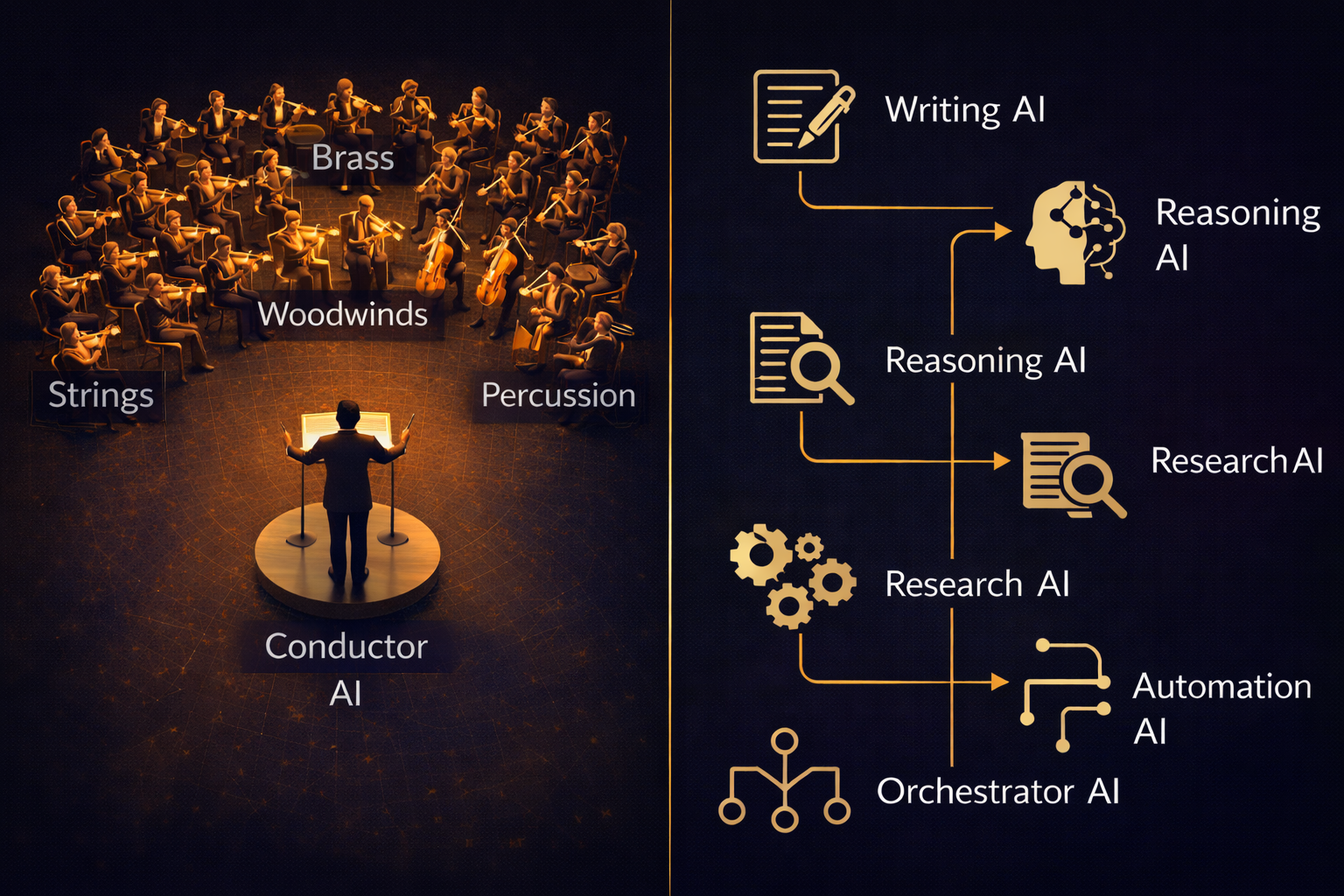
Picture a symphony orchestra. You've got strings, brass, woodwinds, percussion. Each section is world-class at what it does. But put them all on stage without a conductor and a score? You get expensive noise. What makes a great orchestra isn't just the talent in each chair. It's the coordination. The right instrument at the right moment, handing off to the next, building something none of them could produce alone.
That's exactly what's happening right now in AI. And if you run a small or midsize business, you're going to want to understand this before your competitors do.
For the past two years, most business owners have been experimenting with AI the same way: open one tool, type a prompt, get a result. One instrument at a time. That works fine for simple tasks. But the AI industry has quietly moved on to something much more interesting, and significantly more powerful. It's called multi-model AI orchestration. And it's the difference between a single instrument and a full orchestra.
What Is Multi-Model Orchestration, and Why Should You Care?
Here's the short version: instead of using one AI model to handle everything, multi-model orchestration routes different parts of a task to different AI models based on what each one does best. The basic breakdown of the tasks are:
Reasoning model: Handles complex analysis.
Research-specialized model: Handles information gathering.
Writing model: Handles the final output.
Code model: Handles automations.
Coordinator model: Manages the hand-offs.
The analogy extends pretty naturally. The conductor doesn't play an instrument. The conductor reads the full score, knows what each section should be doing at every moment, and keeps them synchronized. In AI orchestration, that conductor is often a larger reasoning model like Anthropic's Claude Opus or OpenAI's GPT-5, tasked not with doing the work directly but with deciding who does what.
Why does this matter for your business? Because the tasks that drive revenue aren't simple. Writing a proposal isn't just writing. It's researching the prospect, understanding their industry, pulling in relevant case studies, pricing it correctly, and formatting it professionally. That's four or five distinct cognitive tasks. One AI model doing all of them is like asking your violinist to also play the drums. They can approximate it. But it won't sound like music.
The businesses that figure out orchestration in the next 12 months will have a structural advantage that's genuinely hard to replicate.
How the Orchestra Actually Works: The Five Steps
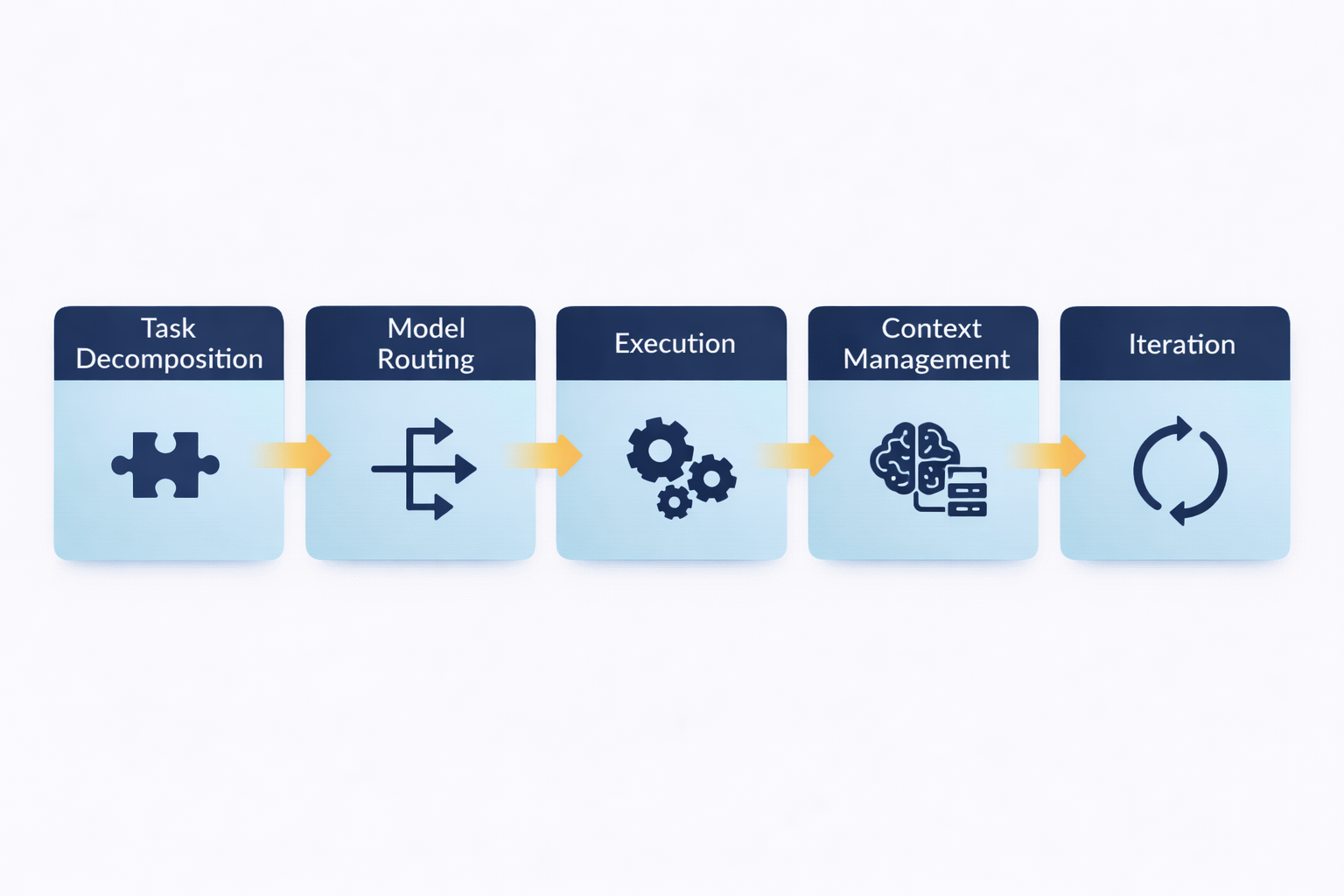
When I looked at how these systems function, whether in enterprise platforms or the newer consumer tools starting to appear, there's a consistent pattern. Five steps that repeat across virtually every AI workflow automation implementation:
Step 1: Task Decomposition
A high-level goal gets broken into subtasks. If you ask an orchestrated system to "prepare a competitive analysis of three vendors for our Q3 purchasing decision," it doesn't just run that query against a single model. It identifies the components: gathering current data on each vendor, analyzing pricing, comparing features, assessing reputation, and structuring the output for a decision-maker audience. Each component gets treated as a separate job with its own requirements.

30+ years of research strategy on projects for Oracle, Cisco, PayPal, and Walmart — now helping small businesses adopt AI that actually delivers.
More about George →Keep reading

AI renders faster and drafts proposals in minutes. But building codes, site conditions, professional liability, and field decisions remain structural limits no model handles.

Only 43% of associations can access their own member data. AI cannot fix what it cannot see. A practical guide to fixing the data foundation before buying AI features.

Solo architects and small design firms spend too many hours writing proposals that look like last month’s. AI can cut the assembly