
Future AI Trends Small Businesses Can’t Afford to Ignore: What the CEOs Are Actually Saying

What the CEOs of OpenAI, Google, Meta, NVIDIA, Anthropic, and Perplexity are predicting for AI in 2026, updated through June, and what it means for small business owners.
There’s a conversation happening right now among the people building the most powerful AI systems on the planet. Most small business owners aren’t part of it. That’s not because the information is hidden. It’s because it’s scattered across earnings calls, investor summits, 20,000-word personal essays, developer conference keynotes, and SEC filings dropped on Sunday evenings. Nobody has time to read all of it. I did.
I’ve spent the last several months reading everything the CEOs of OpenAI, Microsoft, Google, Meta, Anthropic, NVIDIA, SpaceX, and Perplexity have published or said publicly in 2026. Not the filtered headlines. The actual transcripts, blog posts, and conference remarks. What they’re saying about future AI trends will directly shape the tools you use, the prices you pay, and the competitive landscape you operate in over the next 12 to 24 months.
Here’s what stood out, what’s changed since January, and what you should be doing about it right now.
A quick note before we get into it. When I started pulling this together in January, I thought I was writing a Q1 roundup. Then March happened. Then the earnings calls in April dropped. Then the IPO filings landed in June. Every time I thought the picture was complete, something significant shifted. So I kept reading. What you’re getting here is the full first-half view, not because I planned it that way, but because the pace of developments demanded it.
AI Is Becoming a Utility, and the Timeline Moved Up
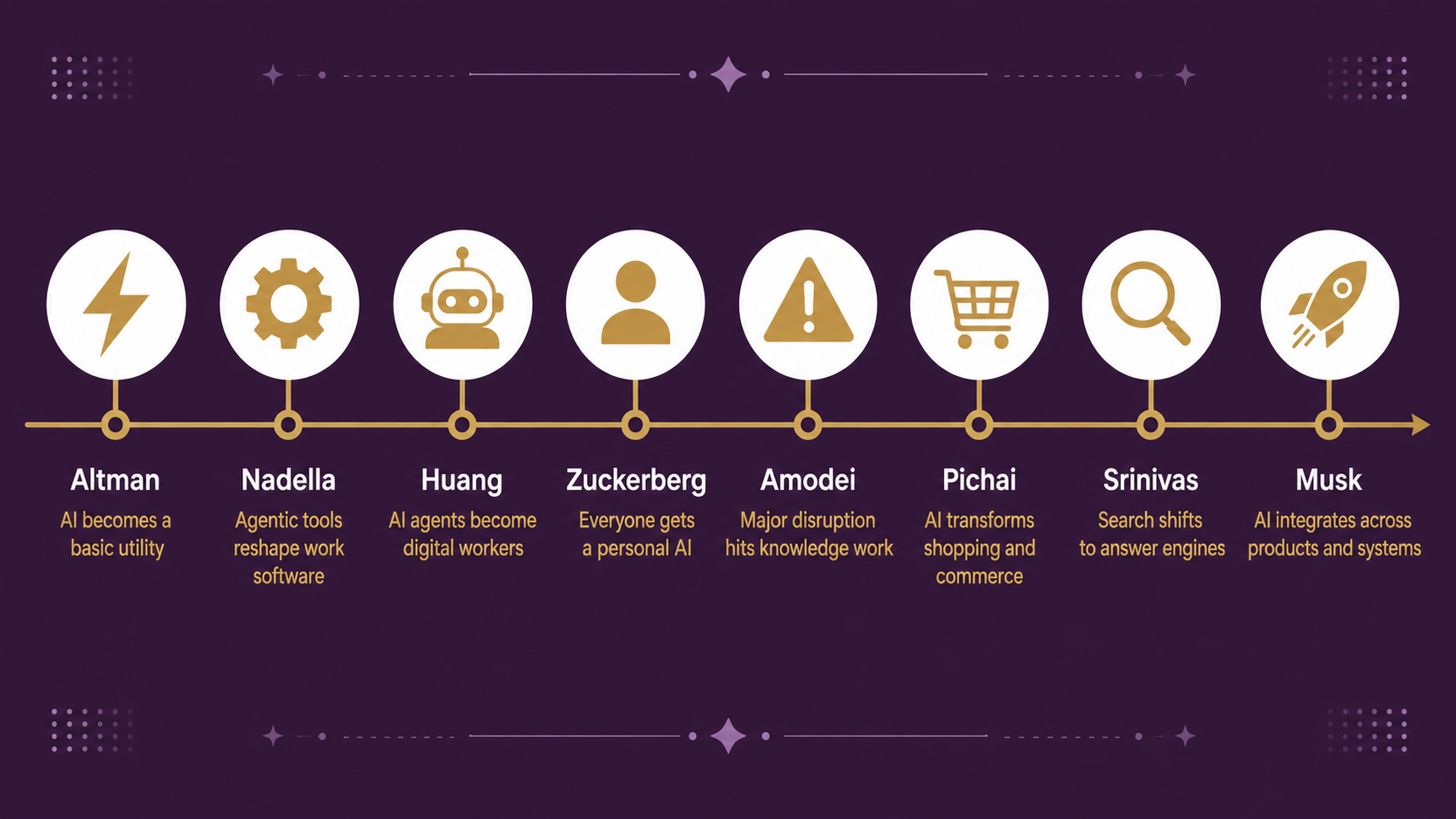
Sam Altman has been saying variations of this for a while, but the framing he used earlier this year landed differently. He described a near future where businesses purchase intelligence the same way they purchase electricity. On demand. By usage. No special expertise required.
That’s infrastructure language, not software language. And it matters because it signals how OpenAI is positioning itself for its IPO. On June 8, OpenAI filed a confidential S-1 with the SEC. The company is generating roughly $2 billion per month in revenue and has more than 900 million weekly active users on ChatGPT, a number that climbed past 1 billion monthly active app users by late spring. Those are not experimental numbers. That’s a utility-scale operation.
Satya Nadella, CEO of Microsoft, made a complementary argument on his blog at the start of the year. He called 2026 a “pivotal year” for AI. Not because of a new breakthrough, but because the industry has finally moved past spectacle and into substance. Nadella’s point was sharp: AI models have outpaced our ability to use them effectively. He calls this “model overhang.”
I’ve seen that overhang in every client conversation I’ve had this year. The tools are already more capable than most businesses realize. The gap isn’t the technology. It’s the implementation.
2026 Is the Year AI Agents Stopped Being a Buzzword
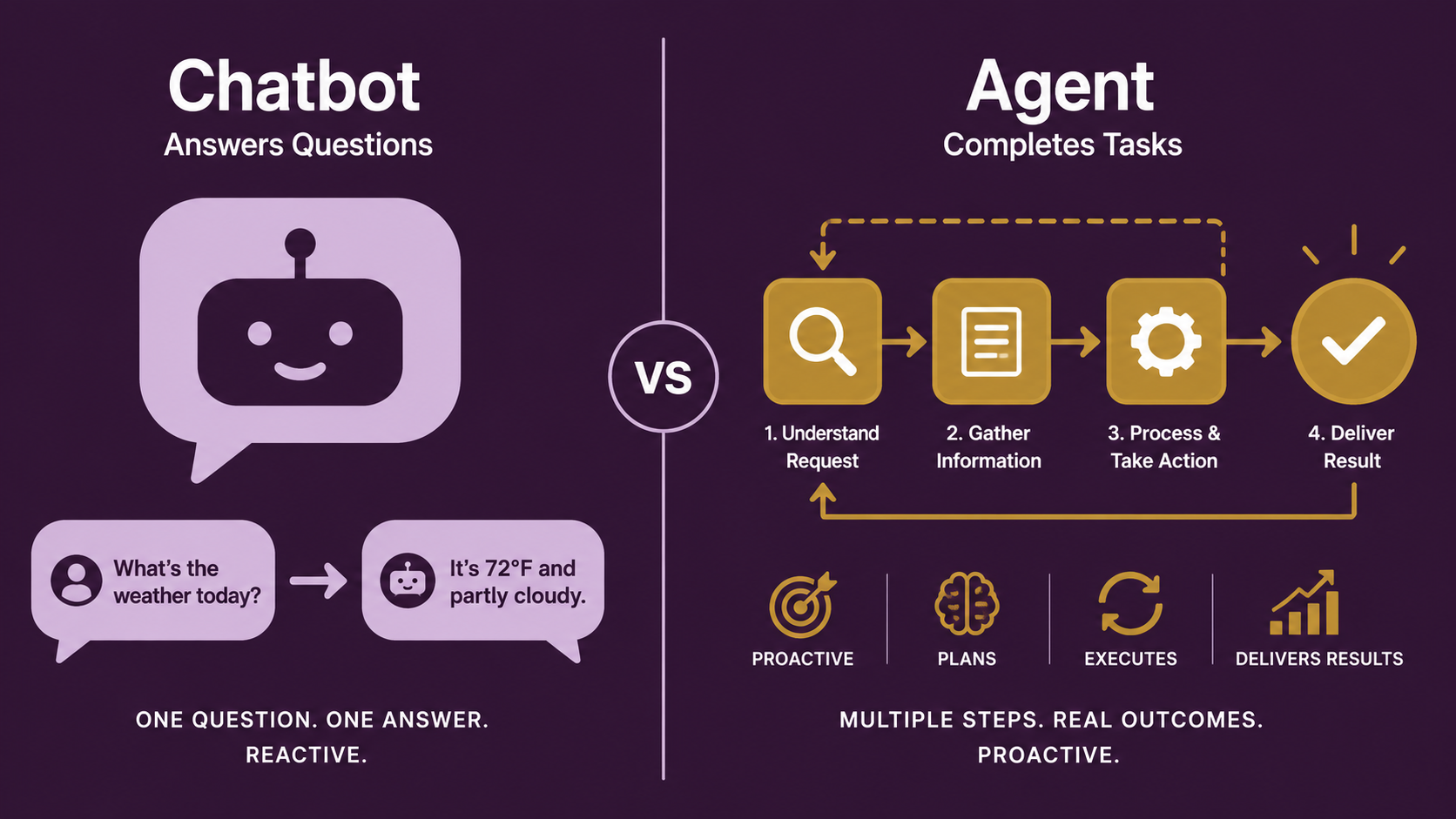
If there’s one theme that every major AI CEO hit in the first half of 2026, it’s agents. Not chatbots. Agents. Systems that don’t just answer your questions but actually do things on your behalf.
Jensen Huang, CEO of NVIDIA, laid this out at the company’s GTC conference in March. He envisions a future where every employee works alongside teams of AI agents, targeting a ratio of 100 agents per human worker within a decade. He then did something I haven’t seen a tech CEO do before: he proposed giving engineers an AI token budget worth half their base salary. His logic was blunt. A $500,000 engineer who doesn’t consume $250,000 in AI tokens should “deeply alarm” their manager.
That’s not a prediction about the future. That’s an operating philosophy he’s implementing now.
Mark Zuckerberg echoed this during Meta’s Q4 earnings call in January. He predicted 2026 would be the year AI starts to “dramatically change the way that we work.” Meta reported that projects which used to require entire teams are now being handled by a single person with AI support.
Think about what that means for a small business. If one talented person with the right AI tools can do the work of a small team, the economics of hiring change completely. I’ve been

30+ years of research strategy on projects for Oracle, Cisco, PayPal, and Walmart — now helping small businesses adopt AI that actually delivers.
More about George →Keep reading

Only 43% of associations can access their own member data. AI cannot fix what it cannot see. A practical guide to fixing the data foundation before buying AI features.

Solo architects and small design firms spend too many hours writing proposals that look like last month’s. AI can cut the assembly

AI is eroding the two things associations have always sold: information and credentials. The ones that survive will use AI to rebuild value, not automate admin.