
AI Tools for Competitive Analysis: How to Monitor Your Competitors Ethically (in 10 Minutes a Week)
Set up AI competitive monitoring in 30 minutes, spend 10 minutes a week reviewing it. Free and paid tools, plus a weekly routine that works. From Galyx.
A competitor of one of my clients did something unexpected last month. They dropped prices on three key services, restructured their website, and ran a targeted ad campaign in the same zip codes where my client does most of his business. My client found out about it six weeks later. From a customer who mentioned it.
Six weeks. In that time, the competitor had already pulled two recurring accounts. The damage was done before my client even knew there was a fight.
This happens more than you’d think. Most small business owners either don’t monitor their competitors at all, or they do it the old-fashioned way: occasional Google searches, maybe checking a rival’s website once a quarter, and relying on word of mouth. That approach worked in 2015. In 2026, it’s bringing a paper map to a GPS world.
Here’s the good news. AI tools for competitive analysis have reached the point where a non-technical business owner can set up a monitoring system in a single sitting, spend roughly ten minutes a week reviewing it, and know more about competitor activity than most companies with dedicated research departments knew five years ago. Some are free. Others cost less than your monthly coffee budget. And the intelligence they provide can directly affect your pricing, positioning, and growth strategy.
Why Most Small Businesses Get Blindsided by Competitors
Crayon’s 2025 State of Competitive Intelligence report found a 76% year-over-year increase in AI adoption within competitive intelligence teams. Sixty percent of CI teams now use AI daily. That’s among companies with dedicated CI functions. For small businesses? The story is different.
Most small businesses rely on informal methods. A conversation at a trade show. A customer complaint that mentions a rival. An accidental discovery while browsing industry forums. These aren’t useless, but they’re incomplete, inconsistent, and slow.
The competitive intelligence software market for small businesses is growing fast. Research from the Competitive Intelligence Alliance estimates it will climb from $2.56 billion in 2023 to over $6 billion by 2030. The tools are getting cheaper and easier to use, but adoption among smaller companies still lags. In my experience, the businesses that do set up monitoring almost always find it was worth the effort. The ones that don’t tend to learn the hard way, like my client did.
Your competitors don’t need to be smarter than you. They just need better information sooner. AI competitive analysis tools close that gap.
Start Here: Free AI Tools for Competitive Analysis
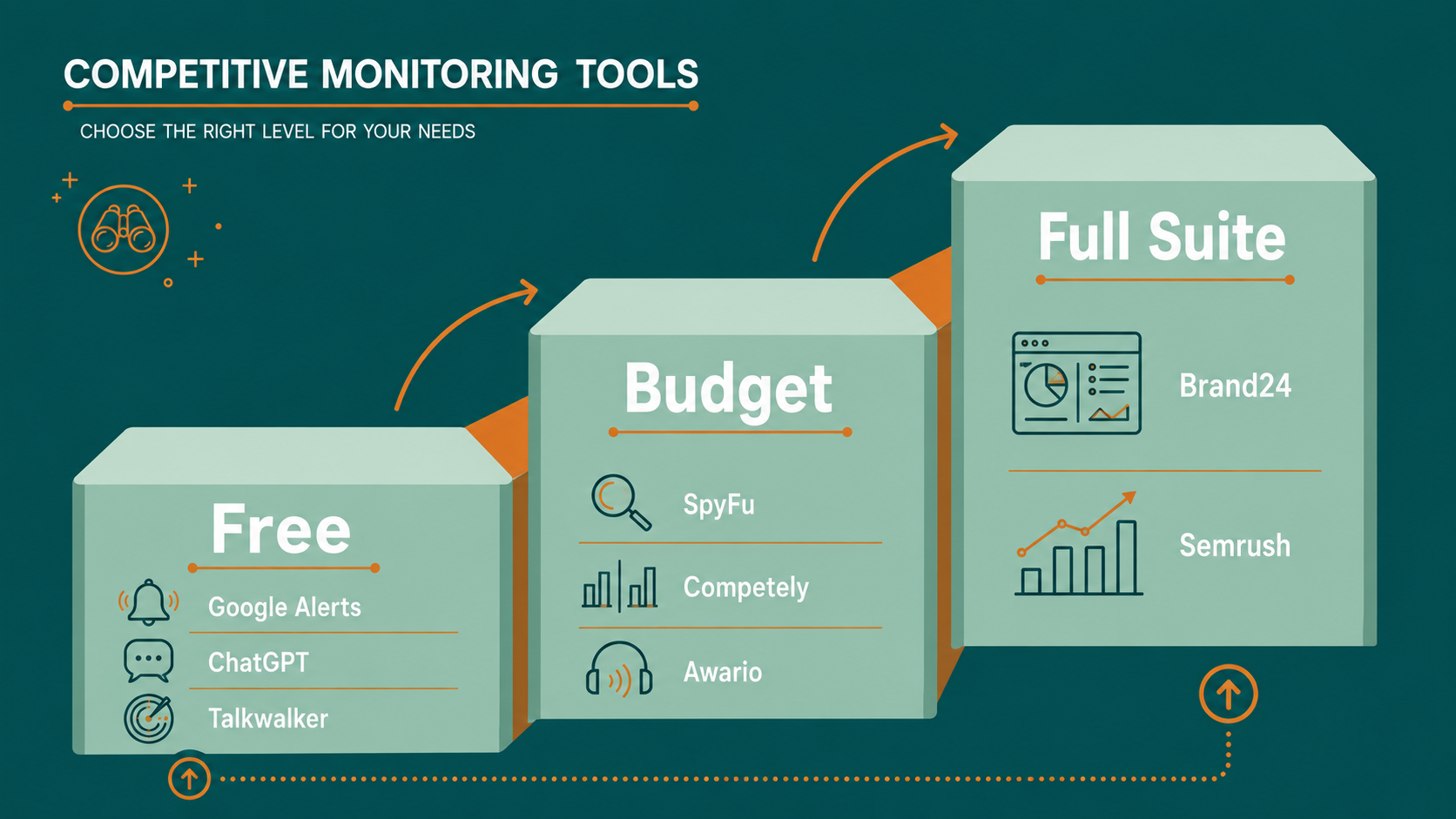
Before spending a dollar, there are several effective tools you can set up in under ten minutes.
Google Alerts: Still the Starting Line
Google Alerts is free, takes about thirty seconds per alert, and delivers email notifications whenever Google indexes new content matching your search terms. Set up alerts for each competitor’s company name, their key products, and their owners’ names. Add one for your own business while you’re at it.
The limitations are real. Google Alerts misses social media entirely, most forum discussions, and anything behind a paywall. It

30+ years of research strategy on projects for Oracle, Cisco, PayPal, and Walmart — now helping small businesses adopt AI that actually delivers.
More about George →Keep reading

Only 43% of associations can access their own member data. AI cannot fix what it cannot see. A practical guide to fixing the data foundation before buying AI features.

Solo architects and small design firms spend too many hours writing proposals that look like last month’s. AI can cut the assembly

AI is eroding the two things associations have always sold: information and credentials. The ones that survive will use AI to rebuild value, not automate admin.