Demystifying AI for Non-Tech Small Business Owners: A Plain-Language Guide

A plain-language guide to AI for small business owners who aren’t technical. What it does, where to start, and what to watch out for. From Galyx.
My first boss was fond of saying that you don’t need to understand how an engine works to drive a car. You just need to know where the steering wheel is, what the pedals do, and where you want to go.
I’ve been thinking about that a lot lately, because every week I talk to small business owners who are convinced that AI is something they need a computer science degree to use. They hear terms like “large language models” and “neural networks” and “machine learning” and their eyes glaze over. Then they go back to running their business the same way they did last year, while their competitors quietly start using tools that save them ten hours a week.
Here’s what I want to be upfront about: the AI industry has done a terrible job of explaining itself to normal people. The companies building these tools love technical jargon. The media coverage alternates between breathless hype and doomsday warnings. Neither is useful if you’re a plumbing company owner in Denver trying to figure out whether ChatGPT can help you write better estimates.
So this post is my attempt at demystifying AI for non-technical business owners who don’t have a technical background, don’t want one, and need to know what’s useful, what’s not, and where to start. No jargon. No hype. The practical stuff.
What AI Is (In Language That Respects Your Intelligence)
Artificial intelligence, in the way that matters to your business right now, is software that can look at information and recognize patterns in it. Based on those patterns, it either makes decisions or generates new content. That’s the whole thing at a functional level.
When you use ChatGPT to draft an email, it’s predicting what words should come next based on patterns it learned from enormous amounts of text. When your email marketing tool tells you the best time to send a campaign, it’s recognizing patterns in when your customers open emails. When a customer service chatbot answers a question about your return policy, it’s matching the customer’s question to patterns in your documentation.
None of this requires you to understand the math behind it. You don’t understand the math behind GPS either, but you use it every day to get where you need to go. AI tools in 2026 work the same way. The interfaces are designed for people who aren’t engineers. The setup is getting simpler every quarter. And the results are measurable in hours saved and dollars earned.
The Small Business AI Adoption Numbers Tell Two Stories
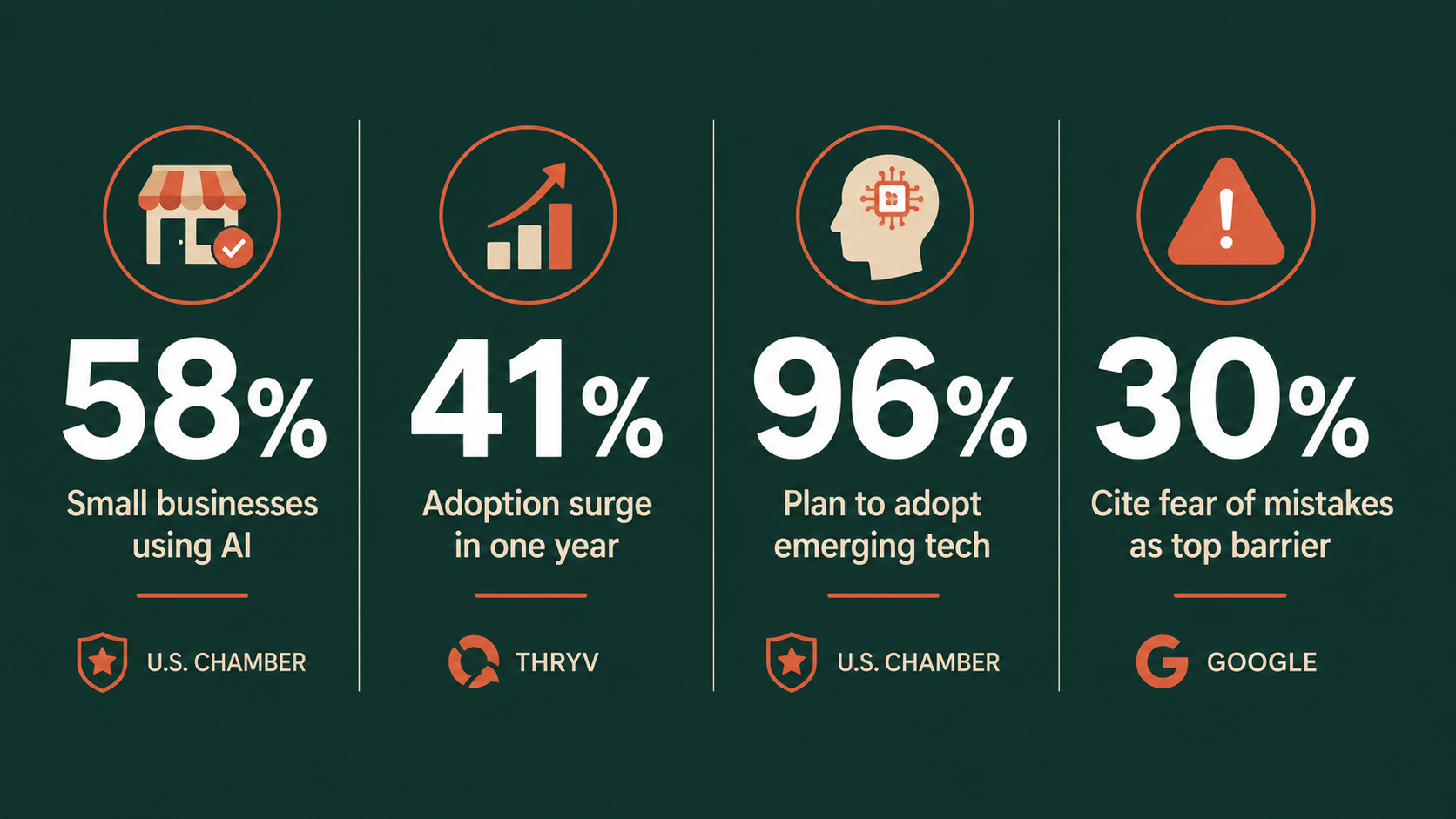
The U.S. Chamber of Commerce’s 2025 Empowering Small Business report found that 58% of small businesses now use generative AI. That’s more than double the 23% reported in 2023. Sounds like most businesses have figured this out.
But dig into what “use” means and the picture gets more complicated. Most of that adoption is what researchers call exploration: someone on the team tried ChatGPT a few times, or the accounting software added an AI feature that runs in the background. Intentional, strategic use? Much rarer.
A Thryv survey tells a similar story from a different angle. In 2024, 39% of small businesses were using AI. One year later, 55%. That’s a 41% jump. The sharpest growth was in companies with 10 to 100 employees, where usage went from 47% to 68%. Those businesses are big enough to feel competitive pressure but small enough that saving a few hours a week per person changes the bottom line.
The SBA’s Office of Advocacy published a finding late in 2025 that caught my attention. Early in 2024, large businesses used AI at 1.8 times the rate of small ones. Eighteen months later, the gap had narrowed significantly. That’s notable. In previous technology waves like broadband internet, small businesses lagged behind by years, not months.
A Google-commissioned study of small businesses found that the top barriers to AI adoption aren’t cost or

30+ years of research strategy on projects for Oracle, Cisco, PayPal, and Walmart — now helping small businesses adopt AI that actually delivers.
More about George →Keep reading

AI is eroding the two things associations have always sold: information and credentials. The ones that survive will use AI to rebuild value, not automate admin.
Labor Day was created to honor human work. In 2026, AI handles the busywork. Here is what to automate and what to protect.
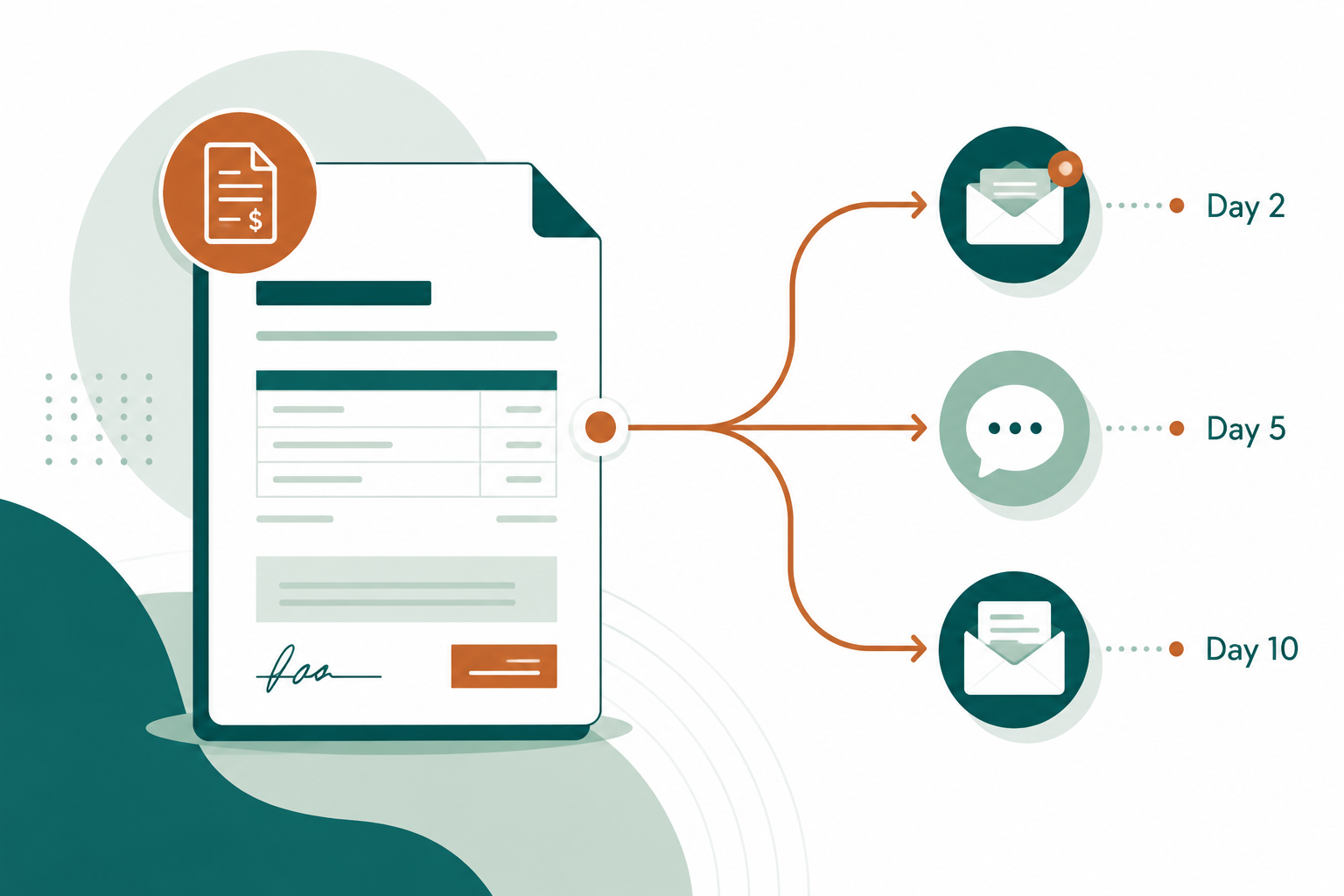
Small businesses have no line item for AI. Costs are scattered across credit cards, subscriptions, and bundled software tiers. A guide to building your first AI budget.