
Fraud Detection AI for Small Finance Teams: How to Spot Problems Before They Drain Your Business
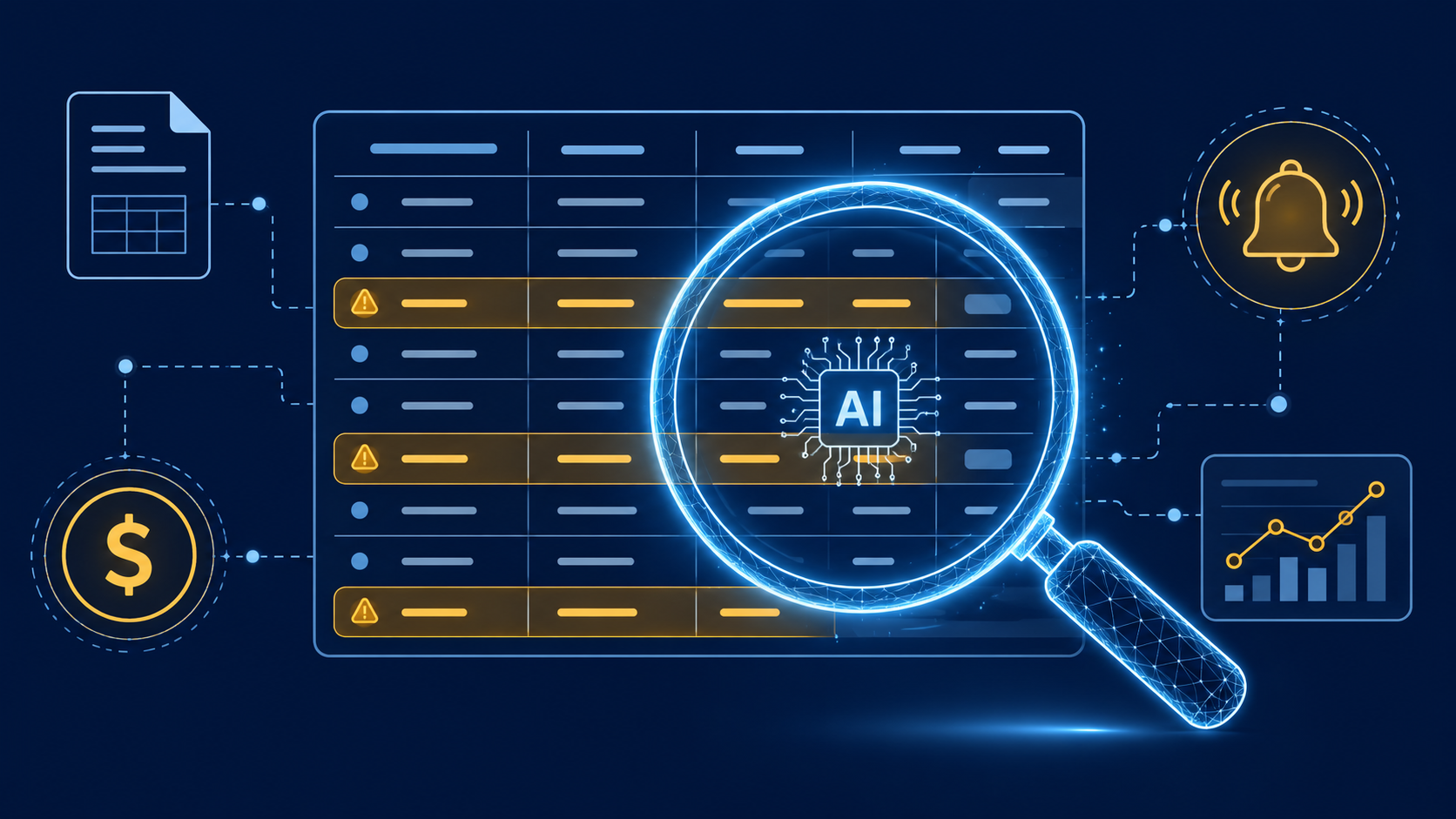
Small businesses lose 5% of revenue to fraud annually. AI fraud detection tools are now affordable and accessible. ACFE data, setup steps, and tools.
A friend who owns a business asked me to look over some expenses last month. After about 15 minutes, I saw something interesting.
She runs a 15-person professional services firm. Solid revenue, loyal clients, a bookkeeper she’d trusted for years. When I asked about fraud prevention, she almost laughed. “George, we’re too small for that.” Then I showed her two vendor payments that looked routine individually but, viewed together over three months, formed a pattern her accounting software never flagged. The amounts were always just under her approval threshold. The vendor name was slightly misspelled each time, a trick that prevents automated matching. The total: just over $11,000.
She wasn’t a victim of some elaborate cybercrime ring. It was a common scheme that’s been draining small businesses for decades. And her bookkeeper had noticed something “off” months earlier but didn’t have a systematic way to escalate it.
This is the reality for most small finance teams. You don’t have a compliance department or a forensic accountant on retainer. What you do have is a growing number of transactions, limited time to review them, and a fraud landscape that’s getting more sophisticated every quarter. The good news: fraud detection AI has reached a point where it’s accessible and genuinely useful for businesses without enterprise budgets.
The Fraud Problem Is Worse Than Most Small Business Owners Realize
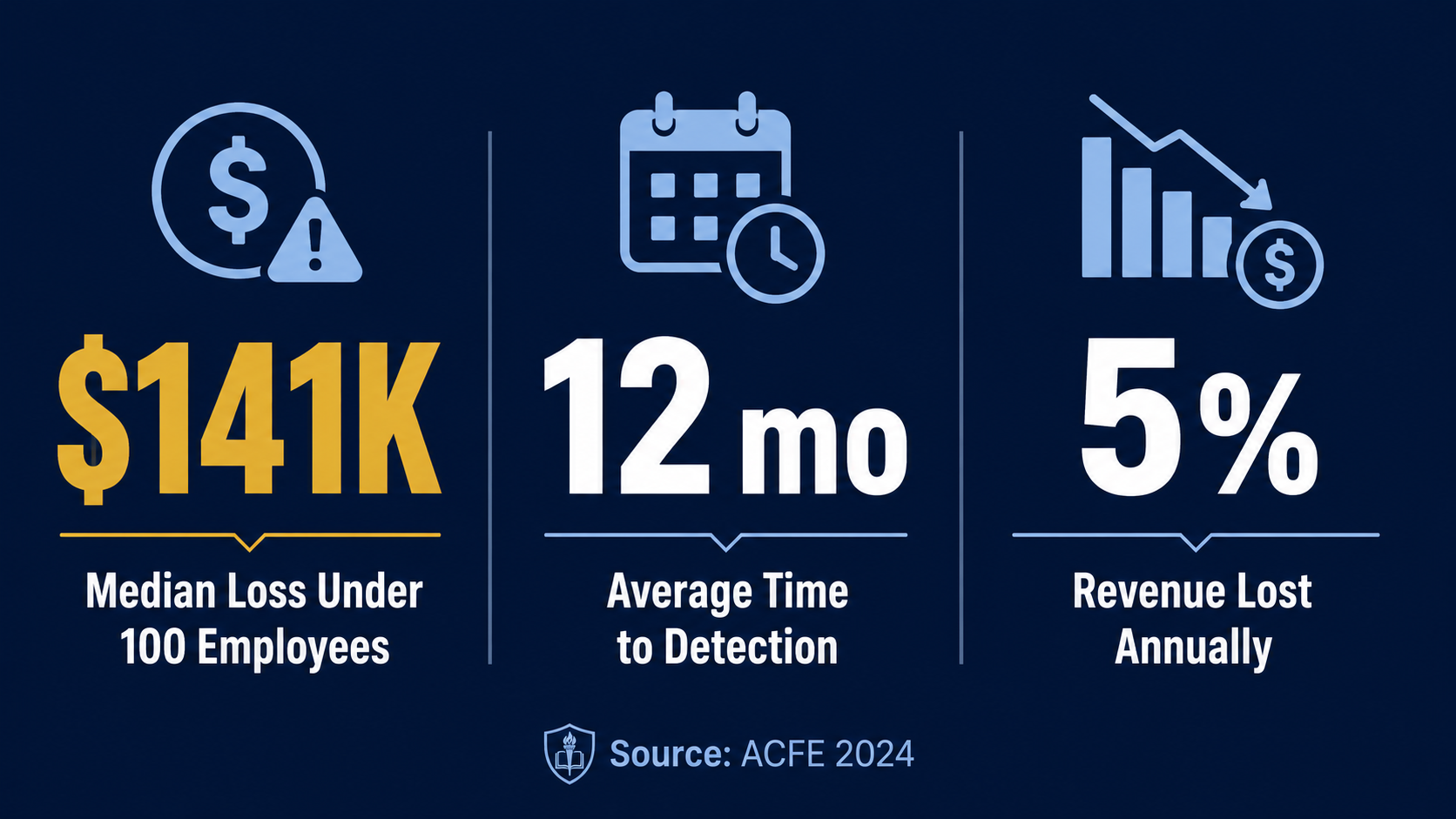
The ACFE’s 2024 Report to the Nations analyzed over 1,900 fraud cases across 138 countries. Organizations lose an estimated 5% of annual revenue to occupational fraud. For small businesses with fewer than 100 employees, the median loss per case was $141,000. For a company doing $2 million in revenue, that’s potentially catastrophic.
The typical scheme runs for 12 months before anyone catches it, with average losses of $9,900 per month. More than half of the cases the ACFE examined were correlated with either a complete lack of internal controls or leadership overriding the controls that existed. That’s not sophisticated hacking. That’s an open door.
KPMG Canada’s February 2026 survey of 251 mid-to-large companies painted an even more urgent picture. Among those that experienced fraud, 81% reported facing AI-enabled attacks. Sixty percent reported receiving AI-generated phishing emails. Thirty-nine percent encountered deepfake document fraud. And only 26% had a tested response plan in place. These were companies with $50 million or more in revenue. If companies that size are struggling, small businesses with thinner defenses have even more reason to be concerned.
The typical fraud scheme runs for a full year before detection. For a small business, that’s twelve months of cash quietly walking out the door.
TransUnion’s H2 2025 fraud report found that U.S. businesses lost the equivalent of 9.8% of revenue to fraud on average, a 46% increase from the prior year. Small businesses are disproportionately affected because they have fewer people watching the money.
Why Traditional Fraud Detection Fails Small Teams
If your current fraud prevention strategy is “my bookkeeper checks everything,” you’re relying on a system designed for a slower era.
Your accounting software is a system of record built for periodic reconciliation, not real-time surveillance. It processes transactions in batches. A pattern of twenty $190 payments to a slightly misspelled vendor? Your system sees twenty individual valid transactions. A human reviewing a monthly summary might not catch it either, especially with hundreds of other line items demanding attention.
Manual review doesn’t scale. When your business was processing fifty transactions a month, one careful person could spot irregularities. At five hundred or five thousand, fatigue sets in. Confirmation bias takes hold. The person checking the numbers starts trusting patterns they’ve seen before, which is precisely what a smart fraudster exploits.

30+ years of research strategy on projects for Oracle, Cisco, PayPal, and Walmart — now helping small businesses adopt AI that actually delivers.
More about George →Keep reading

Only 43% of associations can access their own member data. AI cannot fix what it cannot see. A practical guide to fixing the data foundation before buying AI features.

Solo architects and small design firms spend too many hours writing proposals that look like last month’s. AI can cut the assembly

AI is eroding the two things associations have always sold: information and credentials. The ones that survive will use AI to rebuild value, not automate admin.