
The AI Leader: How Small Business Owners Are Deploying AI That Actually Works
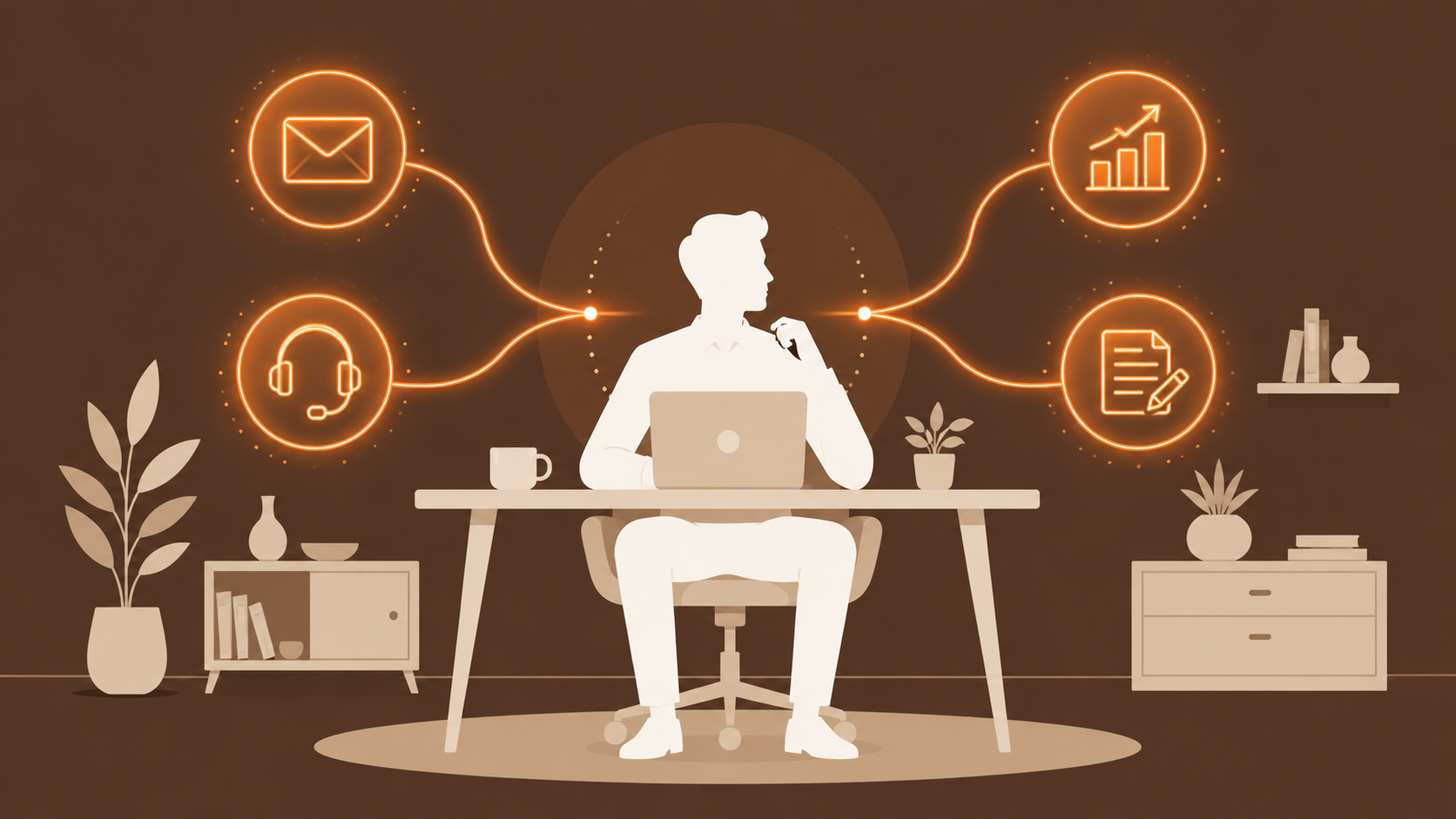
Small business owners are deploying AI agents across four key roles. The ones getting results treat it with hiring discipline, not as a coworker. Practical guide from Galyx.
I know someone who fired her part-time office assistant last fall and replaced the role entirely with AI. Three months later, she called me.
The results were mixed. Email triage was faster than it had ever been. Calendar conflicts vanished. Monthly expense categorization that used to take her assistant a full day happened in minutes. But customer responses sounded off. Follow-up emails were too polished, too generic. Three long-time clients mentioned it. One used the word “cold.”
Here’s what I told her: the AI didn’t fail. The deployment did.
She’d signed up for the tools, pointed them at her workflows, and walked away. No context about her client relationships. No examples of how she actually talks to people. No review period where she caught the mismatches before her clients did. That conversation changed how I think about what separates the business owners who get real value from AI and the ones who end up frustrated, out a few hundred dollars a month, and more skeptical than when they started.
What Changed Between 2024 and Now
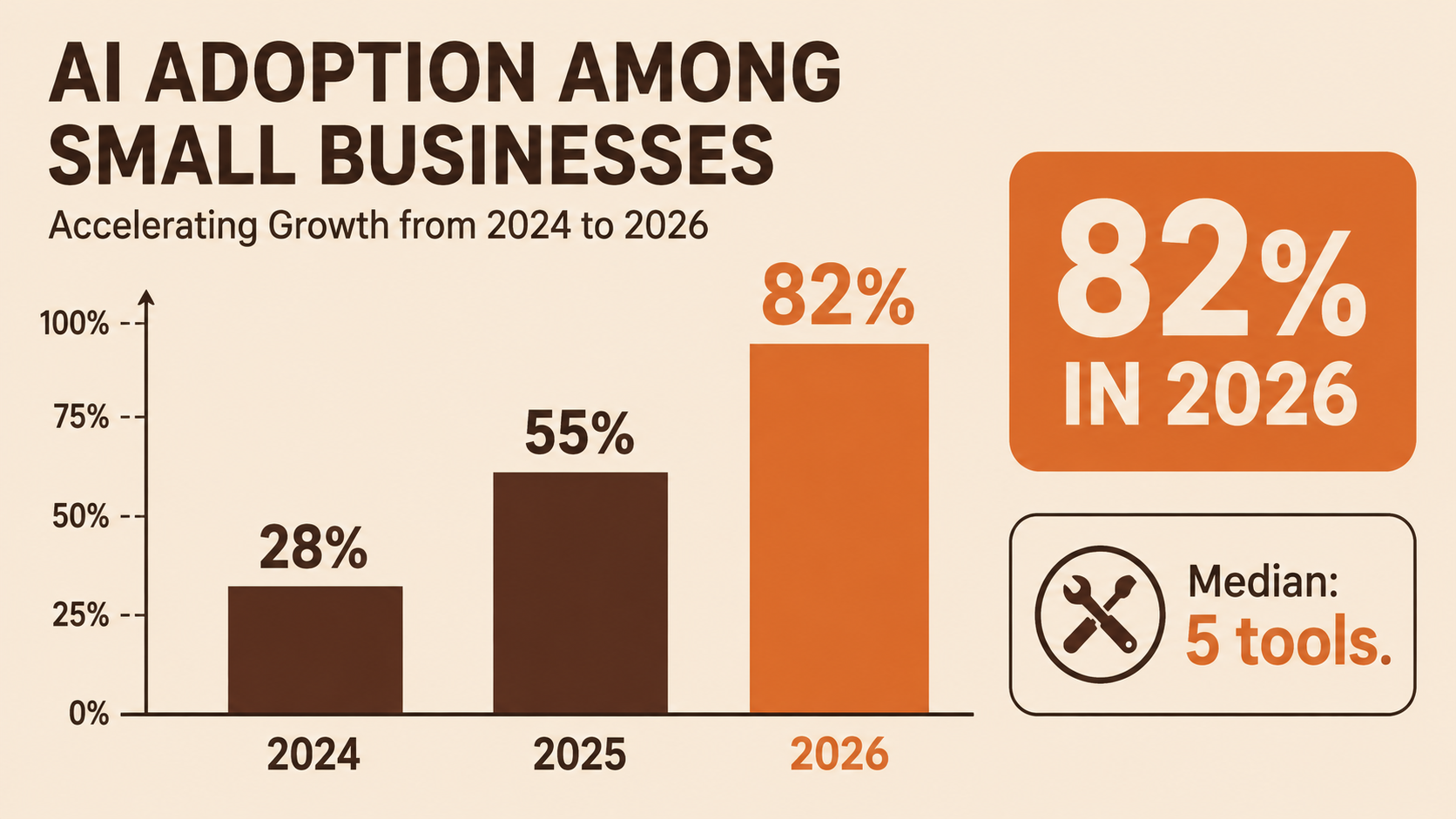
The scale of AI adoption among small businesses moved faster than most of us expected. SBE Council’s March 2026 survey found that 82% of small business employers now use at least one AI tool. That’s not the number that surprised me. This is: the median company runs five different AI tools across their operations. Five. That’s not experimentation. That’s a working technology stack.
But adoption numbers only tell you what people bought. They don’t tell you whether it’s working.
Microsoft’s 2026 Work Trend Index, which surveyed 20,000 workers across ten countries, found what they called the “Transformation Paradox.” Employees are adopting AI faster than their organizations can support it. Only 16% of AI users qualify as “Frontier Professionals” in Microsoft’s framework, people who’ve actually redesigned how they work around AI rather than just layering it on top of old routines.
The finding that stopped me: two thirds of AI’s real business impact comes from organizational factors. Culture, management support, workflow design. The technology is no longer the bottleneck. The thinking around it is.
The “Hire AI” Debate
Harvard Business Review published two pieces this year that frame the tension every small business owner should understand.
In February, Srinivasan and Wei wrote about the rise of “agent managers” at companies like Salesforce, where a support agent manager named Zach Stauber now oversees fleets of AI

30+ years of research strategy on projects for Oracle, Cisco, PayPal, and Walmart — now helping small businesses adopt AI that actually delivers.
More about George →Keep reading

AI renders faster and drafts proposals in minutes. But building codes, site conditions, professional liability, and field decisions remain structural limits no model handles.

Only 43% of associations can access their own member data. AI cannot fix what it cannot see. A practical guide to fixing the data foundation before buying AI features.

Solo architects and small design firms spend too many hours writing proposals that look like last month’s. AI can cut the assembly