
Solopreneur AI Tools: Tailor Your AI Tech Stack for Small Business Success

Solopreneurs waste hours on admin tasks. Build a tailored AI tech stack with just 2-3 tools that save time, cut costs, and boost productivity without subscription overload
I love research. I feel like an online Sherlock Holmes as I discover answers that raise new questions, then get those answers too. Last week, I went down one of those rabbit holes after a conversation with a friend who runs a solo consulting practice. She'd signed up for seven different AI tools in the span of two months. Seven. And she was using maybe two of them regularly. The rest? Sitting there, quietly billing her credit card while collecting digital dust.
Her situation isn't unusual. It's practically the default for solopreneurs right now.
There are over 41 million solopreneurs in the United States, contributing more than $1.3 trillion to the economy. Solo-founded businesses jumped from about 24% in 2019 to over 36% by mid-2025. These aren't hobbyists. These are serious business operators building real companies without the traditional overhead. And AI tools have become one of the biggest reasons that's even possible.
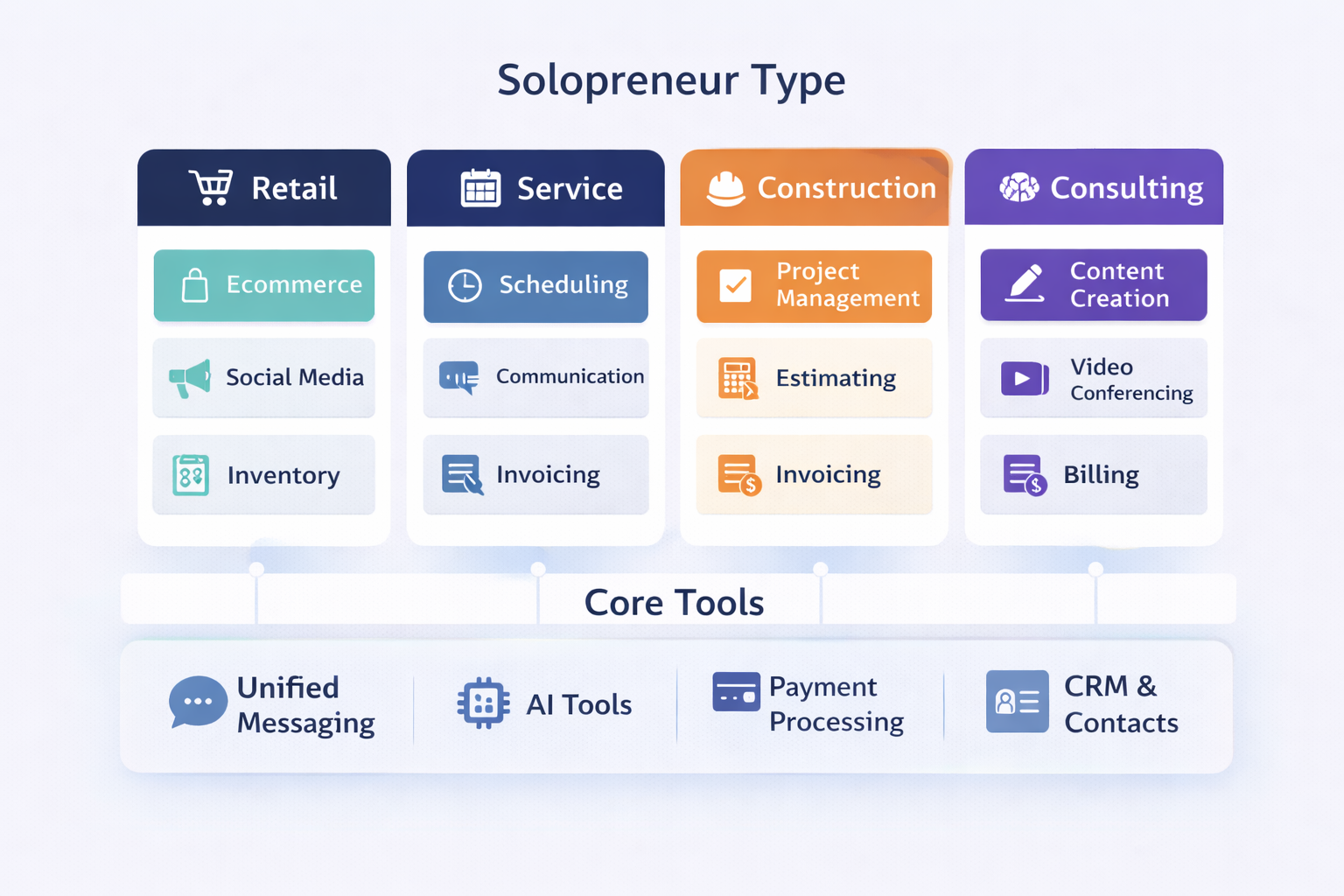
But here's the problem nobody wants to talk about: most solopreneurs are building their AI tech stack the wrong way. They're subscribing to tools because someone on LinkedIn said they should, not because the tool solves a specific problem in their specific business. A solo retail shop doesn't need the same toolkit as a freelance consultant. A one-person construction outfit has completely different demands than a solo creative director. Yet the advice floating around treats all of them the same.
So let's fix that. I'm going to walk through what a smart, tailored solopreneur AI tools setup looks like across different industries, explain what's worth your money and what's not, and give you a framework for building a lean stack that actually matches how you work. Think of this as practical guidance from someone who's lived through this same problem, made mistakes until I learned better.
The Subscription Trap: More Tools Does Not Equal More Productivity
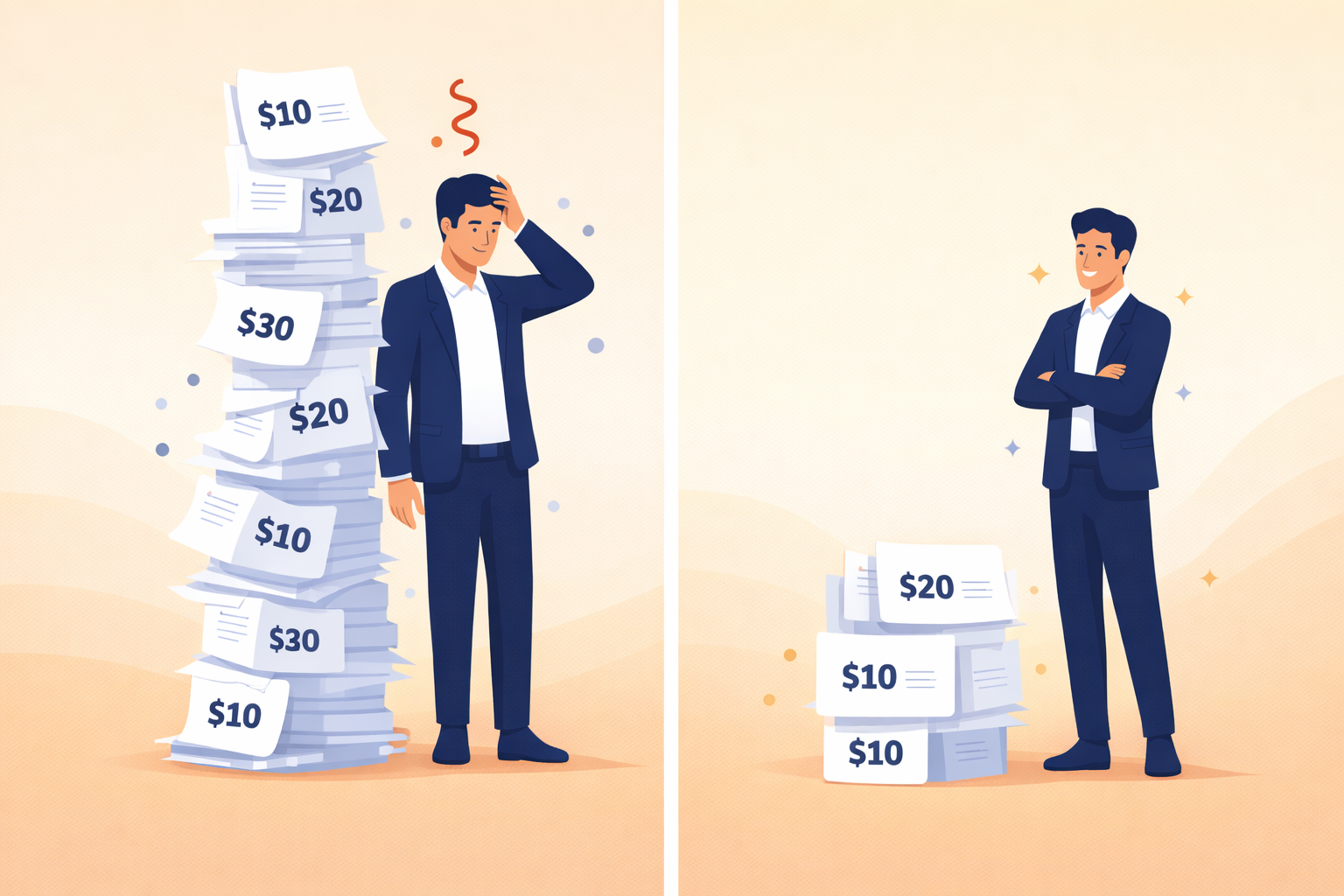
Let me give you a number that should make you uncomfortable. Solopreneurs spend roughly 21% of their working time on non-billable administrative tasks. That's about one day out of every five spent on stuff that doesn't generate revenue. AI tools are supposed to fix that. And they can. But only if you pick the right ones.
The reality in 2026 is that subscription fatigue has become a genuine business problem. ChatGPT Plus runs $20 a month. Claude Pro is another $20. Add a scheduling tool, an email automation platform, a design app, maybe a CRM with AI features, and suddenly you're spending $150 to $300 a month on AI subscriptions alone. For a solopreneur watching every dollar, that's not trivial.
And here's what makes it worse: a NEXT Insurance survey found that small business AI adoption dropped from 42% in 2024 to 28% in 2025. Not because the tools got worse. Because business owners got frustrated. They signed up, couldn't figure out how to make the tools useful for their specific workflow, and bailed. Sixty-two percent cited a lack of understanding about AI's benefits as their primary barrier.
Building an AI tech stack for solopreneurs is like packing for a backpacking trip. Throw in everything that looks useful, and you'll be exhausted before you hit the trailhead. Pack smart, with only the gear that matches your route, and you'll move fast and stay comfortable. The first question isn't "what tools should I buy?" It's "What are my three biggest time drains, and which of them can AI realistically handle?"
The Core Layer: What Almost Every Solopreneur Needs
Before we get into industry-specific recommendations, there's a foundation that applies to nearly everyone running a business on their own. Think of these as your base camp tools.
One general-purpose AI assistant. Not three. One. Whether that's ChatGPT, Claude, or Gemini, pick the one that feels most natural to you and learn it deeply. A Harvard Business School study with Boston Consulting Group found that consultants using AI completed tasks 25% faster and produced work that was 40% higher quality. But the key finding was that the biggest gains came from people who learned to use the tool well, not from people who spread themselves across multiple tools. Master one before adding another.
One automation connector. Zapier or Make.com. These link your existing tools together so data flows without you manually copying and pasting between apps. When a new lead fills out your contact form, the automation creates a CRM entry, sends a welcome email, and adds a follow-up task to your calendar. That's thirty seconds of setup saving you ten minutes per lead, every single time.
One AI-enhanced email or communication tool. Whether it's Mailchimp's AI features, Superhuman, or just using your main AI assistant to draft messages, you need something that reduces the time you spend on email. Solopreneurs check their email an average of 15 times a day. That's a lot of context-switching that kills real work.
That's it for the base level. Only three subscriptions, costing about $60 a

30+ years of research strategy on projects for Oracle, Cisco, PayPal, and Walmart — now helping small businesses adopt AI that actually delivers.
More about George →Keep reading

AI renders faster and drafts proposals in minutes. But building codes, site conditions, professional liability, and field decisions remain structural limits no model handles.

Only 43% of associations can access their own member data. AI cannot fix what it cannot see. A practical guide to fixing the data foundation before buying AI features.

Solo architects and small design firms spend too many hours writing proposals that look like last month’s. AI can cut the assembly