
How Nonprofits and Foundations Can Use AI to Run Smarter and Serve Their Communities Better
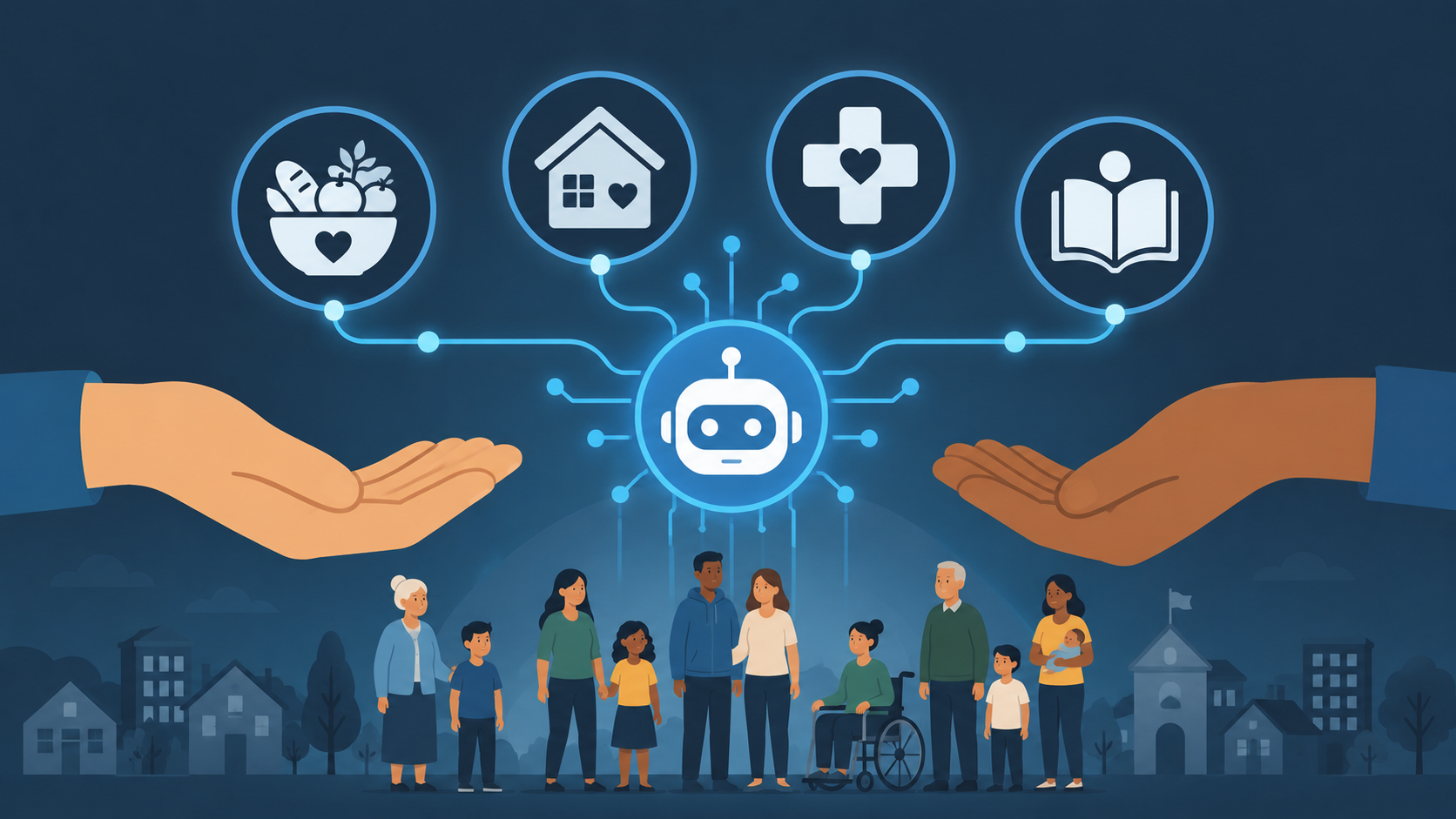
92% of nonprofits use AI. Only 7% see major results. How foundations and small organizations are using AI for both operations and community impact. Practical guide from Galyx.
I’ve worked with nonprofits on and off throughout my career, but I’d never thought about AI and the nonprofit sector as a single problem until a phone call a few months ago. My friend Bob has spent his entire career in the nonprofit world. Thirty years working with community foundations, food banks, youth programs. We were catching up, and the conversation turned to AI the way every conversation does now. What he said surprised me.
“Everyone keeps telling me AI is going to change everything for nonprofits,” he said. “But the articles I read are all about fundraising and donor management. That’s important, obviously. But I run a food bank that serves 14 counties with nine full-time staff. We coordinate 200 volunteer drivers and field 300 calls a week from families trying to figure out what they qualify for. I don’t need better fundraising emails. I need to give my team back the hours they’re losing to paperwork so they can spend them on the people who call us.”
That conversation stuck with me because Bob captured something the broader AI discussion keeps missing. Foundations and nonprofits don’t just run operations. They serve communities. And the AI applications on the service side, the ones that directly touch the people these organizations exist to help, are where the real transformation is happening in 2026.
This post covers both sides. How AI can make a small organization’s internal operations significantly more efficient, and how it can amplify the actual mission, the community-facing work that keeps people fed, housed, healthy, educated, and connected.
The AI Adoption Paradox in the Nonprofit Sector
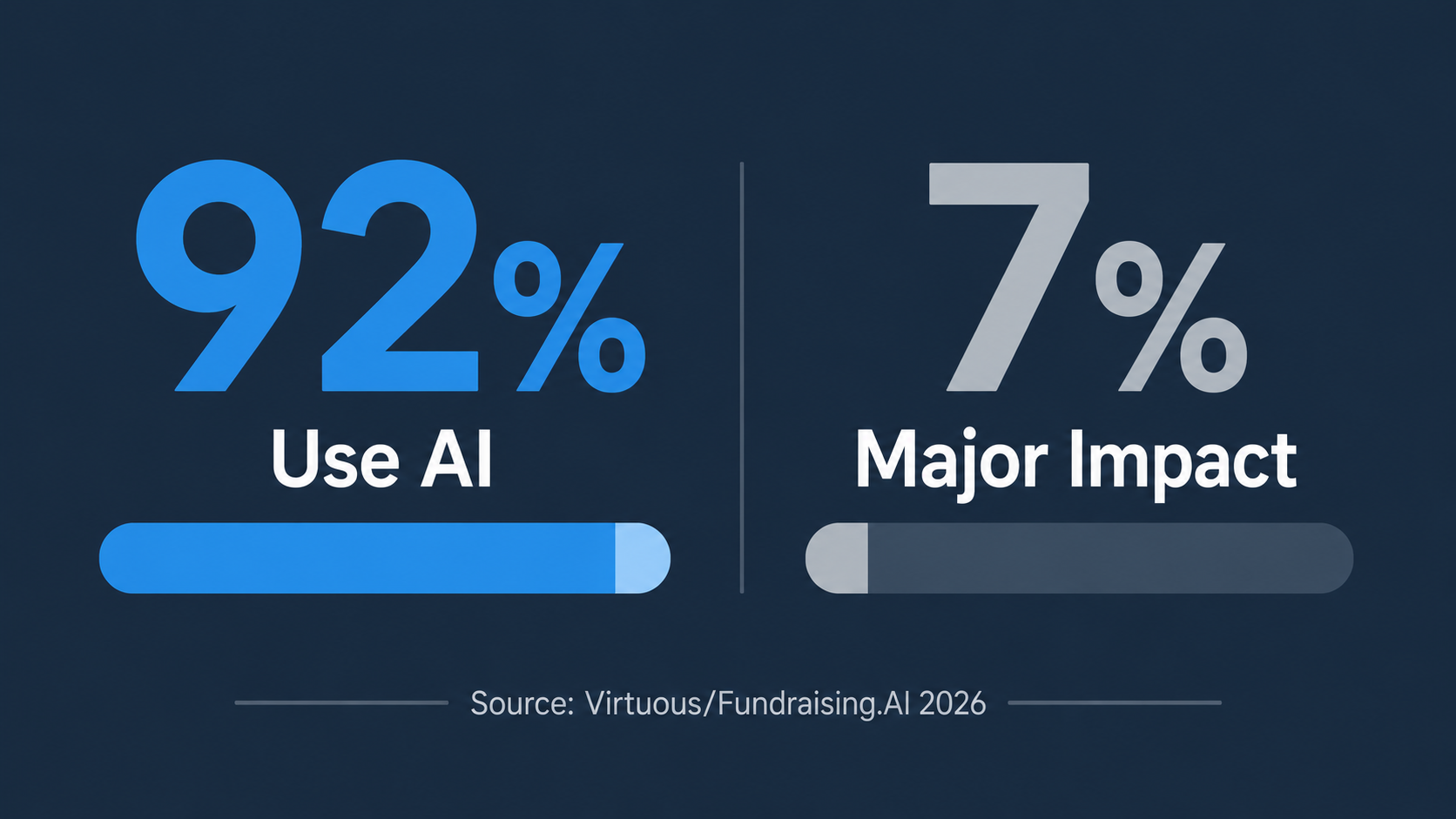
The 2026 Nonprofit AI Adoption Report from Virtuous and Fundraising.AI surveyed 346 organizations and the numbers tell a striking story. 92% of nonprofits now use AI in some form. But only 7% report major improvements in organizational capability. Seventy-nine percent report small to moderate efficiency gains, which sounds decent until you realize that means the vast majority are getting marginal returns.
What explains the gap? The report found that 81% of staff use AI individually, without shared workflows or governance. Sixty-five percent describe their AI use as reactive: one-off prompts, personal experimentation, and no coordination. Only 4% have documented, repeatable workflows that include AI. That’s the pattern Bob described without knowing the data. People are dabbling. They’re not integrating.
And the governance picture is concerning. 47% of nonprofits using AI have no formal policy at all. For organizations that handle sensitive data about vulnerable populations, that’s a risk that goes beyond operational efficiency.
92% adoption. 7% transformation. The gap isn’t about the technology. It’s about whether AI is embedded in workflows or sitting in someone’s browser tab.
AI for Nonprofit Operations: Where the Hours Come Back
The nonprofits getting real value from AI in their daily operations are the ones treating it as a workflow tool, not a novelty. Here’s where the clearest gains are showing up.
Grant Writing and Reporting
Grant applications and compliance reports consume an enormous share of staff time at most foundations and nonprofits. AI tools can draft grant narratives from bullet-point outlines, reformat financials for different funder templates, and generate first drafts of impact reports that staff then refine. The key word is “draft.” AI handles the blank-page problem. Your team handles the truth and the nuance.
Community foundations are going further. Some are using natural language processing to let grantees submit narrative reports in their own words, with AI extracting key metrics and data points automatically. Less burden on the organizations being funded and better data for the board. One fundraising leader quoted in the Virtuous report described setting aside six hours for an email campaign and finishing in 20 minutes. That ratio, when it’s real and repeatable, changes what a lean team can accomplish.

30+ years of research strategy on projects for Oracle, Cisco, PayPal, and Walmart — now helping small businesses adopt AI that actually delivers.
More about George →Keep reading

Labor Day was created to honor human work. In 2026, AI handles the busywork. Here is what to automate and what to protect.
Small businesses have no line item for AI. Costs are scattered across credit cards, subscriptions, and bundled software tiers. A guide to building your first AI budget.

The word of the year blames the machine. The machine is not the variable. What everyone calls AI slop is almost always human slop.