
AI Cybersecurity Threats: What Small Business Owners Need to Know About AI-Powered Threats
AI-powered cyberattacks are surging against small businesses. Learn the real threats, sophisticated AI phishing, deepfakes, and scams plus steps to protect your company.
A client of mine runs a small company in Pennsylvania. They're small but have built a solid reputation for their innovative product. Early last year, her office manager got an email from what appeared to be one of their vendors requesting payment via wire transfer. The email referenced a specific invoice number, mentioned specifics that seemed legitimate, and matched the client's writing style almost perfectly.
It was fake. All of it. Generated by AI.
The office manager didn't catch it in time, sent the payment, then mentioned to the founder later that day, "Oh, I paid one of the vendors because the account was overdue." My client said, "We don't have any overdue invoices from them," and had a sinking feeling. As they looked into the matter, they were defrauded and lost several thousand dollars that they'll never see again. These are sophisticated businesspeople who have warned others about phishing emails for years, but in a moment of distraction, stepped into the very trap they helped others avoid. The sentence I remember most when hearing the story is "This one actually looked like it came from someone who knew us."
They're not alone. The numbers tell a story that every small business owner needs to hear. According to the Identity Theft Resource Center, 81% of small businesses experienced cyberattacks in 2025, and 41% of those attacks were AI-driven. The FBI's 2025 IC3 report logged a 37% increase in AI-assisted business email compromise. A Chainalysis report found that AI-powered scams are producing 4.5 times more profit for criminals than traditional methods.
This isn't a distant, enterprise-level problem. It's hitting companies with five employees and companies with five hundred. And the tools making it possible are the same ones you and I use every day.
The Problem Is Bigger Than Most People Realize
OpenAI published a detailed threat report in February 2026 titled Disrupting Malicious Uses of Our Models that should be required reading for anyone running a business. Credit is due to OpenAI for the transparency here: they're naming specific operations, showing how criminals use their platform, and explaining what they're doing to stop it. Most companies wouldn't publish this kind of information voluntarily. Their report is 37 pages and was the inspiration for me to research this further today.
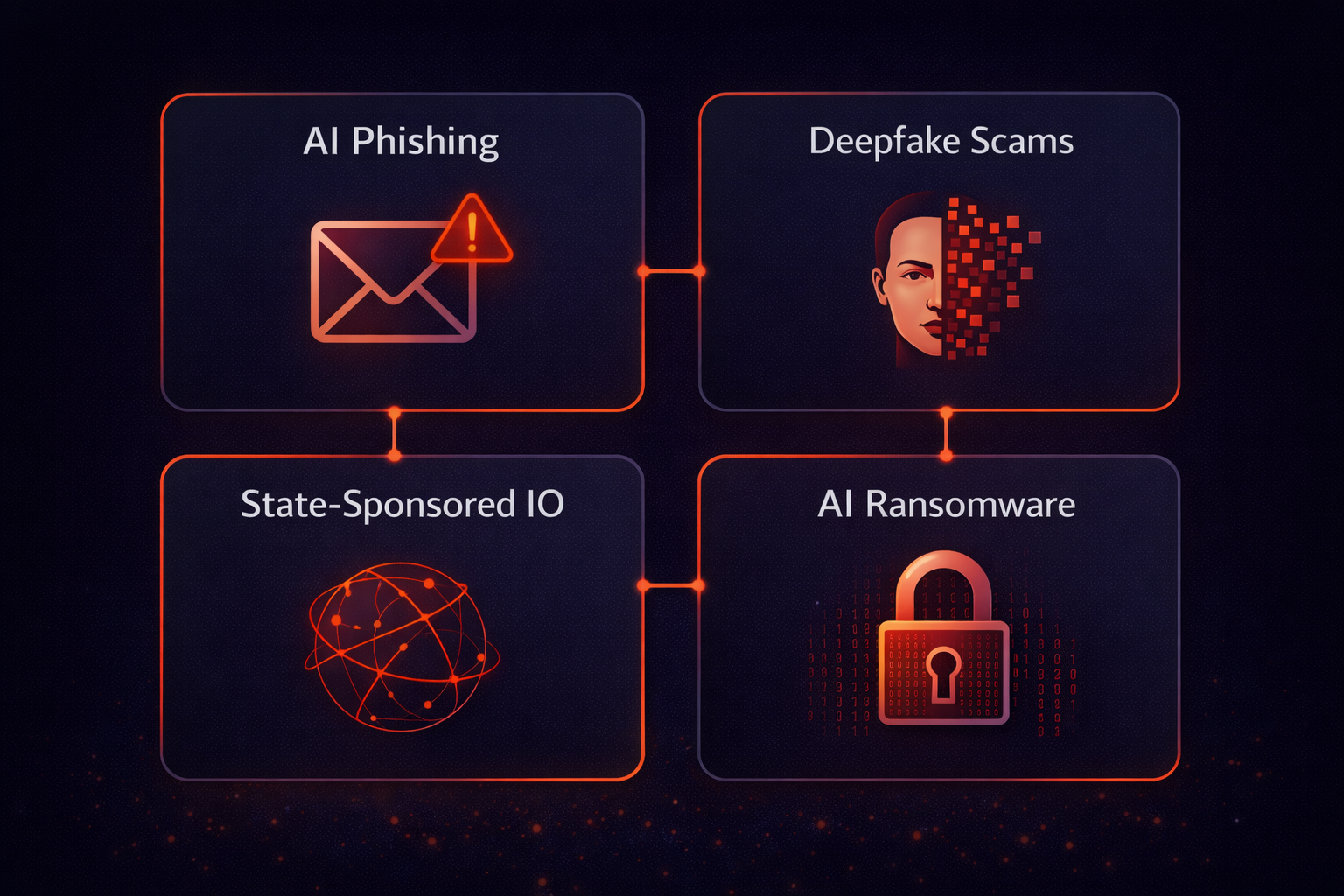
What the report reveals is unsettling. Threat actors aren't building some exotic new technology. They're taking the same AI tools available to everyone and bolting them onto old criminal playbooks. Phishing emails that used to be riddled with spelling errors now read like they were written by your actual vendor. Romance scams that used to fall apart after two messages can now sustain emotionally manipulative conversations for weeks. Influence operations that used to require armies of human operators can now run with a handful of people and thousands of AI-generated posts.
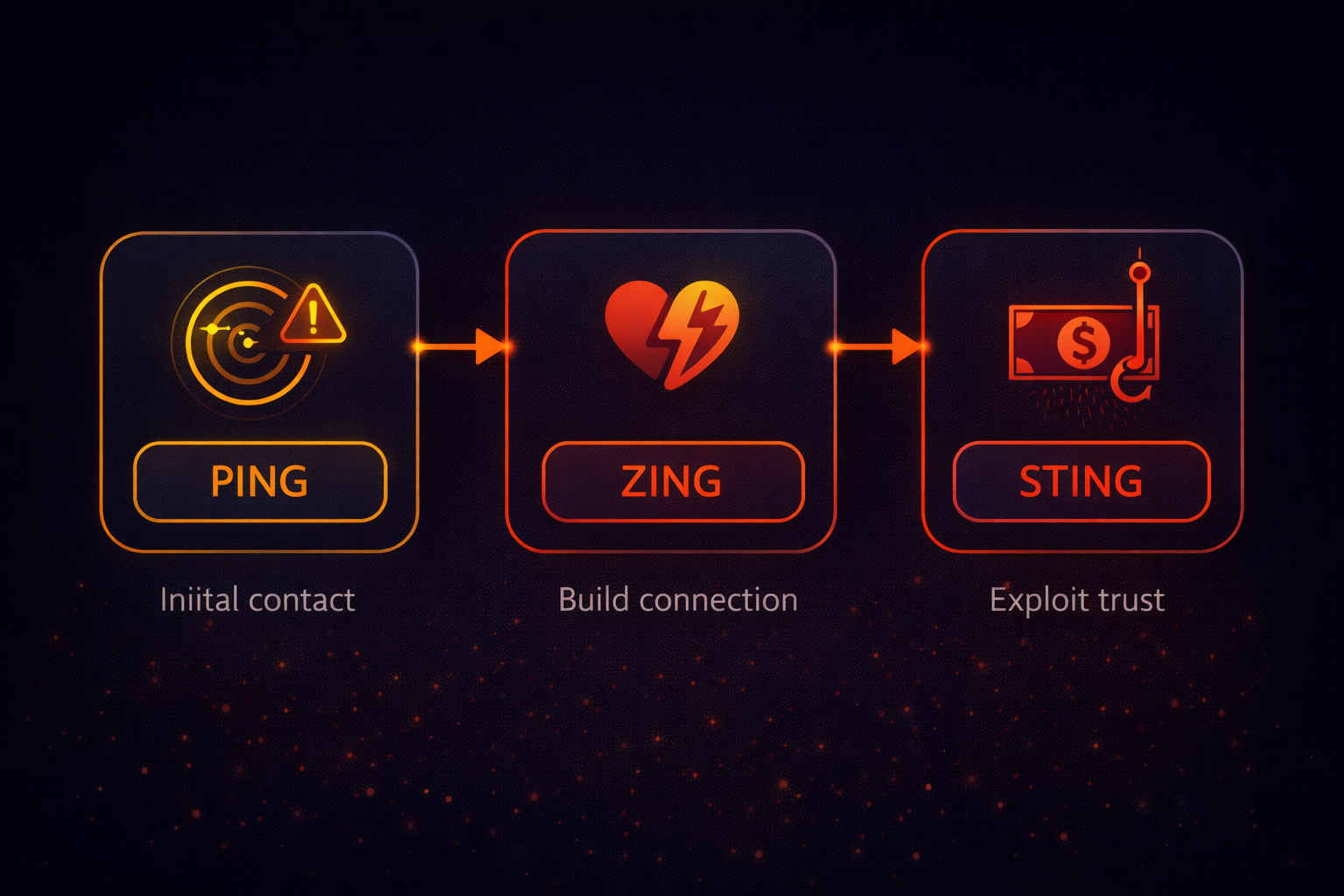
The OpenAI report describes what they call the "ping, zing, sting" pattern in scam operations. The ping is the cold contact: AI generates a message designed to grab your attention. The zing triggers an emotional response: excitement about a deal, fear of missing out, attraction to a fake person. The sting extracts money. Each stage is now more convincing, faster, and cheaper to execute than ever before.
One case study in the report, codenamed "Date Bait," described a semi-automated romance scam operation likely based in Cambodia. The criminals used ChatGPT to generate promotional content for a fake dating service, ran targeted social media ads aimed at young men in Indonesia, and then handed off conversations to a mix of human operators and AI chatbots. Their internal reports (which the scammers themselves ran through ChatGPT) tracked hundreds of active targets and calculated a "kill value" for each victim: the maximum amount they expected to extract before blocking them.
That's not a hypothetical scenario. That's a real operation that was running at scale until OpenAI shut down the accounts.
What AI Cybersecurity Threats Actually Look Like in 2026
Let me break down the specific categories of AI cybersecurity threats that are hitting businesses right now, because "cybersecurity" is one of those words that makes people's eyes glaze over until it happens to them.

30+ years of research strategy on projects for Oracle, Cisco, PayPal, and Walmart — now helping small businesses adopt AI that actually delivers.
More about George →Keep reading

AI renders faster and drafts proposals in minutes. But building codes, site conditions, professional liability, and field decisions remain structural limits no model handles.

Only 43% of associations can access their own member data. AI cannot fix what it cannot see. A practical guide to fixing the data foundation before buying AI features.

Solo architects and small design firms spend too many hours writing proposals that look like last month’s. AI can cut the assembly