The OpenAI Ecosystem: Consumer Giant, Enterprise Question Mark
An honest assessment of the OpenAI ecosystem for small business owners. What ChatGPT does well, where enterprise share is sliding, and how to plan.
Everyone in AI right now is talking about what’s possible. I want to talk about what’s actually happening.
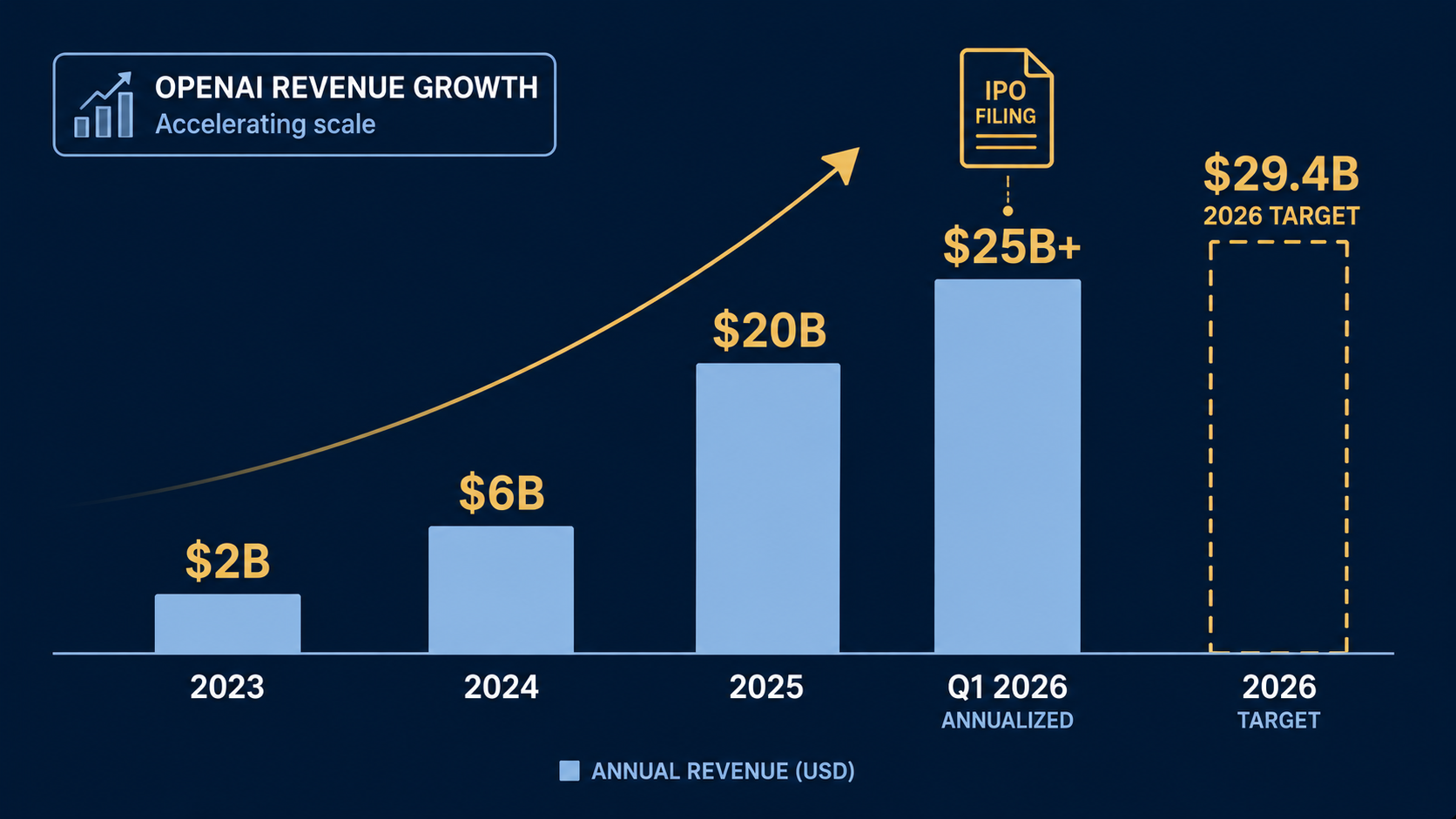
I’ve spent the past several weeks pulling apart the OpenAI ecosystem, not the press releases or the product demos but the structural reality of where it stands in the middle of 2026. The numbers tell a story that’s more complicated than the headlines suggest. OpenAI built the most recognized brand in artificial intelligence. Nine hundred million people use ChatGPT every week. The company generates roughly two billion dollars a month in revenue. Six days ago, it filed paperwork for what could become one of the largest IPOs in market history.
Those facts are real. So are these: enterprise customers are leaving. Competitors are gaining ground faster than most people realize. And the business model that funds all of it is in the middle of a fundamental shift that every business owner relying on ChatGPT should understand.
This is the second post in the Galyx™ AI Ecosystem Series. The first mapped all five major ecosystems. This one goes deep on OpenAI, because it’s the ecosystem most small business owners already use, and the one where the gap between brand perception and structural reality is widest.
The OpenAI Ecosystem by the Numbers
The growth trajectory is staggering, and I don’t use that word casually. OpenAI reported that nine hundred million people use ChatGPT every single week as of early 2026. That figure doubled from four hundred million in February 2025. Reuters reported in June that ChatGPT crossed one billion monthly active app users, making it the fastest app in history to hit that number. Faster than TikTok. Faster than Instagram. Faster than anything.
Revenue tells a similar story. The annualized run rate hit twenty-five billion dollars by March 2026, up from roughly six billion in 2024 and two billion in 2023. OpenAI now generates about two billion dollars every month. I’ve never seen a revenue curve like that in enterprise software. Nobody has.
On the business side, OpenAI reports over nine million paying business users and more than fifty million total paid subscribers. Ninety-two percent of Fortune 500 companies use ChatGPT in some capacity. Those are real numbers, and they matter.
But here’s where I start paying closer attention.
What the OpenAI Ecosystem Does Well for Your Business
I’ll give credit where it’s earned. For a small business owner evaluating AI tools for the first time, ChatGPT remains one of the best entry points. The interface is intuitive. The learning curve is almost flat. A new user can draft an email, analyze a spreadsheet, research a competitor, and brainstorm marketing ideas in the same twenty-dollar-a-month subscription.
Custom GPTs still stand out as one of the most underused features in the platform. You can build a specialized assistant that knows your pricing, your brand voice, your FAQ documents, your internal processes, all without writing code. Three million custom GPTs were created in the first two months of broad availability. I’ve set them up for clients in under an hour, and the ones who use them daily tell me it’s the single highest-value AI feature they’ve adopted.

The integration ecosystem has expanded too. Shopify, Salesforce, Slack, and dozens of other tools now connect directly. OpenAI’s adoption of the Model Context Protocol gives ChatGPT a standardized way to talk to external databases and APIs, which matters more for long-term flexibility than most users realize right now.
For general-purpose productivity, ChatGPT Plus at twenty dollars a month is difficult to beat.
Where the Cracks Show in the OpenAI Ecosystem
Enterprise Market Share Is Sliding
This is the number I keep coming back to. Menlo Ventures tracks enterprise LLM spending closely. Their December 2025 report put OpenAI’s share of enterprise API spend at twenty-seven percent. That’s down from fifty percent in 2023. Half. OpenAI lost nearly half its enterprise share in two years, during a period when the overall market tripled in size.

Where did it go? Anthropic now holds about forty percent of enterprise LLM spend, more than triple its twelve percent share in 2023. Google climbed from seven percent to twenty-one percent over the same period. The three companies combined account for eighty-eight percent of the enterprise market. The Ramp AI Index reported that OpenAI saw its largest single-month decline in business adoption in March 2026.
I talk to developers and technical buyers regularly. The pattern I’m seeing is consistent: they discover ChatGPT first, build initial workflows on it, then migrate their production systems to Claude or Gemini when they need better coding performance, tighter enterprise controls, or more predictable pricing. OpenAI gets the first date. It’s not always getting the second.
The Advertising Shift
On February 9, 2026, OpenAI started showing ads in ChatGPT. The rollout covers Free and Go tier users in the United States. Ads appear as sponsored cards below AI responses, matched to the topic of the conversation. Plus, Pro, Business, and Enterprise subscribers remain ad-free.
Sam Altman called the combination of ads and AI “uniquely unsettling” at Harvard back in 2024. Two years later, his company launched them anyway. I’m not saying that’s hypocritical. I’m saying it tells you something about the financial pressure the company is under.
By May 2026, OpenAI opened ad placement to all US advertisers with no minimum spend through a self-serve platform. If you’re a business owner who uses the free tier for research, content drafting, or customer communication, you should understand what that means: the tool is now partly optimized for advertising revenue, not just your query. Anthropic’s Claude and Google’s paid Workspace tiers don’t show ads. For business users who depend on unbiased outputs, that distinction matters.
The IPO, the Burn Rate, and What They Mean for Pricing
OpenAI filed a confidential S-1 with the SEC on June 8, 2026. The target valuation sits around one trillion dollars. Goldman Sachs and Morgan Stanley are managing the offering. This is no longer hypothetical.

Here’s what makes this worth watching closely. OpenAI’s projected losses for 2026 run somewhere around twenty-seven billion dollars. Read that again. The company generates two billion a month in revenue and is still losing more than it earns. The March 2026 funding round brought in a hundred and twenty-two billion dollars at an eight hundred fifty-two billion dollar valuation, but that capital is fuel, not profit.
Current ChatGPT pricing is subsidized. One of my clients asked me last month whether the twenty-dollar Plus tier would stay at twenty dollars. I told her to plan as if it won’t. When a company is losing money at that scale and preparing for an IPO, the pressure to demonstrate revenue growth lands directly on subscribers. The Wall Street Journal reported that OpenAI missed internal revenue and user targets for Q1 2026. That kind of miss, right before going public, accelerates pricing changes.
The pricing has already shifted more than most users noticed. Business tier dropped from twenty-five to twenty dollars per seat in April. A new Pro tier at a hundred dollars a month launched the same month. The model lineup now includes GPT-5.5, which shipped April 23 and replaced GPT-5.4 as the flagship. Sora, the video generation product, shut down in late March after burning roughly a million dollars a day in compute costs against just 2.1 million in total lifetime revenue.
The product roadmap is moving fast. The pricing roadmap will follow. Build your workflows with that in mind.
Matching the OpenAI Ecosystem to Your Business
I’d tell most small business owners the same thing I told a client in San Jose last week: ChatGPT Plus is still one of the best twenty dollars you can spend on AI. For general productivity, content drafting, email, research, brainstorming, light data analysis, it covers a lot of ground in a single subscription. Custom GPTs add meaningful specialization without technical complexity. If AI is new to your business, this is a solid starting point.
The calculus changes when your needs get more specific. One of my clients runs a twelve-person consulting firm. They built their client-facing AI workflows on the OpenAI API, spent four months integrating it, then moved the whole system to Claude’s API after running a head-to-head comparison on accuracy and structured output quality. The migration took six weeks and cost them about eight thousand dollars in developer time. They told me it paid for itself in the first quarter.

For businesses with API integrations, customer-facing AI applications, or high-volume automated workflows, I’d tell you to test at least two ecosystems before committing. The Menlo Ventures data shows that once an enterprise picks a vendor, eighty-nine percent stay. But the eleven percent who switched reported meaningful improvements. Choosing well up front saves you the migration headache later.
And don’t put everything on one platform. I’ve watched three clients eat months of rework because the tool they built around changed pricing or deprecated a feature. The Model Context Protocol and the Agentic AI Foundation’s open standards mean you can build workflows that swap between models without rebuilding your entire stack. Use that flexibility.
What to Watch for the Rest of 2026
Three things will determine whether the OpenAI ecosystem strengthens or weakens its position for business users over the next six months.
First, ad expansion. Right now ads are limited to Free and Go tiers in the US. If they spread to other tiers or other countries, or if ad placement starts influencing the quality and neutrality of responses, trust will erode among the business users who depend on ChatGPT for unbiased output. I’m watching this one more closely than anything else.
Second, the IPO itself. When the S-1 goes public, we’ll see audited financials for the first time. That will clarify how sustainable the current pricing is. I expect surprises, and I don’t think they’ll all be pleasant ones.
Third, enterprise retention. OpenAI reports eighty-eight percent twelve-month retention among enterprise customers. That’s strong. But Anthropic, Google, and Microsoft are all aggressively courting the same accounts, and the Ramp data suggests the churn rate is accelerating. If the retention number drops below eighty-five percent in the next report, it’ll signal a structural problem, not a blip.
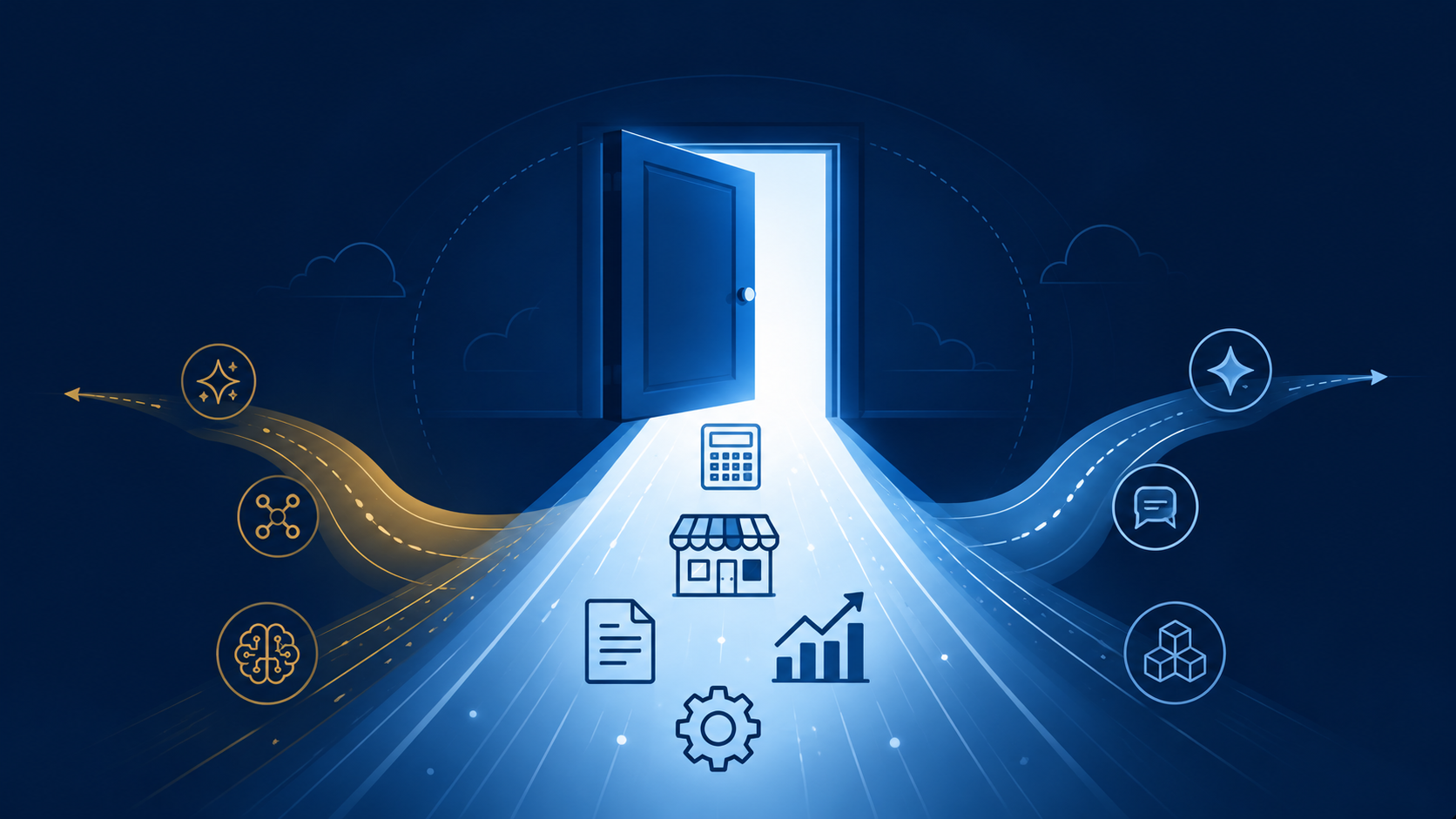
OpenAI built the front door to artificial intelligence. Nine hundred million people walk through it every week. That’s an extraordinary achievement and a genuine strategic advantage that no competitor has matched at the consumer level. The question for business owners isn’t whether to use ChatGPT. Most already do. The question is whether to build your critical infrastructure on a platform whose pricing model, business model, and competitive position are all in the middle of the fastest transformation in the history of enterprise software.
Pay attention to the S-1 when it goes public. Run your own comparisons. And build with enough flexibility that you’re not locked in when the landscape shifts again. It will.
Good decisions start with good information. Galyx is built for the business owner who knows AI matters and needs a technology partner to guide them through it.
Register at Galyx.com for more insights and guidance.

30+ years of research strategy on projects for Oracle, Cisco, PayPal, and Walmart — now helping small businesses adopt AI that actually delivers.
More about George →