The Microsoft AI Ecosystem in 2026: What Changed for SMBs
Microsoft claims Copilot 20 million paid seats and added Claude to its model lineup. What the new pricing, multi-model shift, and enterprise wins mean for your small business.
Late in April, Microsoft told Wall Street that Copilot had crossed 20 million paid seats. Every headline ran with that number like it settled the argument. I read the same transcript and landed somewhere else.
Microsoft has more than 450 million paid Microsoft 365 seats out there. Twenty million against that base. Call it four percent adoption for the Copilot add-on, up from around three percent at the start of the year.
Four percent. After two-plus years and tens of billions of dollars pushing this thing into every corner of Word, Excel, and Teams.
That’s not failure. It’s also not the runaway win Microsoft’s investor materials want you to see. Somewhere between those two readings is where small business owners need to decide this year: is the AI already sitting inside your Microsoft 365 subscription finally good enough to stop shopping around?
Inside the Microsoft AI Ecosystem: The Seat-Count Jump
Three months earlier, the number was 15 million. A third more seats in a single quarter is the kind of jump that gets a CFO’s attention, and it makes you wonder what’s behind it.
Part of the answer is a handful of very large companies moving all at once. Bayer, Johnson & Johnson, Mercedes-Benz, and Roche have each rolled out more than 90,000 Copilot seats. That’s enterprise-wide, not a pilot in one department. Then there’s Accenture, which signed on for over 740,000 seats, the biggest Copilot deal Microsoft says it has closed.
None of that tells you whether anyone uses the thing once IT flips the switch.
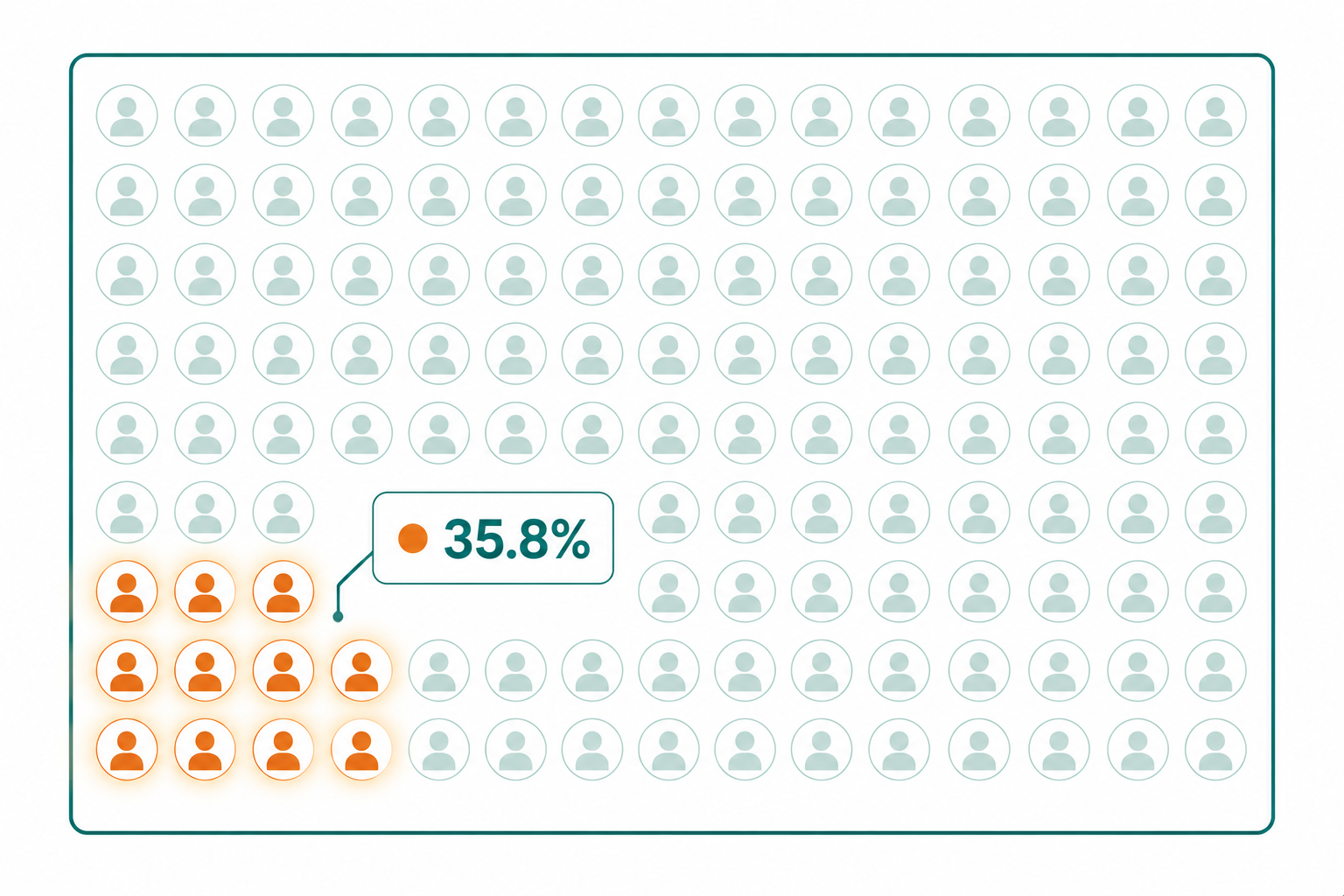
Recon Analytics surveyed more than 150,000 people across the U.S. on how they use AI tools at work. Among those with paid Copilot access, 35.8 percent convert to regular use. That’s the number I’d worry about if I were running this business. ChatGPT’s equivalent figure, from the same survey, is 83.1 percent. Two and a half times the engagement, on a tool plenty of those people are paying for out of their own pockets.
More SKUs won’t close that gap. It closes when the tool saves someone real time on a Tuesday afternoon, and they notice.
“More SKUs won’t close that gap. It closes when the tool saves someone real time on a Tuesday afternoon, and they notice.”

The Microsoft AI Ecosystem Goes Multi-Model
Here’s something that would have sounded strange a year ago. Open Copilot Studio today and you’ll find a model dropdown that includes Claude alongside OpenAI’s options. Claude comes from Anthropic.
That wasn’t always the case. Anthropic’s models showed up as an opt-in option for some Copilot Studio agents toward the end of 2025. Admins had to dig into settings, accept separate terms, and turn it on themselves.
Early in 2026, Microsoft flipped the default. Anthropic became a recognized subprocessor under Microsoft’s own data protection terms, and Claude started appearing automatically inside the Researcher agent and Copilot Studio for most regions.
A couple months after that, Claude moved into the main Copilot chat window itself, not only specialized agents. Microsoft’s pitch is that Copilot is built to use more than one model and pick whichever one fits the task in front of it. By spring, Claude was available across Copilot Chat, Researcher, Copilot Studio, and Edit with Copilot in the Microsoft 365 apps, including Word.
The original promise of the Microsoft ecosystem was that Copilot would be the generalist sitting inside tools you already pay for and that the generalist would never be the best at any one thing. I still think that’s mostly true. But the gap between good enough and actually good got narrower for a few specific tasks. Long documents. Multi-step research. The kind of work where reasoning quality matters more than speed.
One catch if you’re in the EU, the UK, or anywhere in EFTA: the default-on behavior doesn’t apply to you. Your admin still has to flip the switch manually.

What Copilot Costs Your Business Now
If you priced out Copilot Business last year and bookmarked the page, check it again. The eighteen-dollar promotional rate was supposed to expire at the end of March. Microsoft kept extending it. As of this writing, the promo runs through December 31, 2026, for businesses with up to 300 users on an annual commitment. The standard price underneath is twenty-one dollars per user per month, and that is where it will land when the promo finally ends.
Microsoft is raising prices on a chunk of Microsoft 365 plans starting July 1. If you saw those headlines and assumed your Copilot add-on was about to get more expensive too, it isn’t. Standalone Copilot pricing is not affected by that increase at all. Your base Microsoft 365 plan might cost more this summer. Your Copilot line item won’t. Not from this particular change, anyway.
Small relief. But a real one if you’re running the numbers for a ten-person team.
On the other end of the market, Microsoft rolled out a new top-tier bundle aimed at large enterprises. It’s called Microsoft 365 E7, priced at ninety-nine dollars per user per month. The bundle wraps Copilot and a new agent-governance layer called Agent 365 into one package. It also folds in Microsoft’s identity and security tools. None of that is built for a company your size. But Agent 365 is worth watching, because it’s Microsoft’s answer to a question every business will eventually face: who’s responsible when an AI agent, not a person, does something wrong?

Where the Microsoft AI Ecosystem Still Falls Short
The twenty-one dollar number is the one Microsoft puts in the headline. It’s not the number that shows up on your bill if you start building agents in Copilot Studio. Every agent you run burns through prepaid credits or straight Azure consumption. I watched a client’s monthly Copilot bill double inside two months once their operations team started automating report generation with agents, and nobody on the finance side saw it coming because the base subscription cost hadn’t changed at all.
That’s not a Microsoft problem specifically. Every AI platform with agent features works this way now. But it catches people off guard because the marketing still leads with the flat per-seat price.
The deeper issue hasn’t changed since I last wrote about this ecosystem. Copilot’s best features only work if your business runs on Microsoft 365. If you’re on Google Workspace or some mix of tools, most of what I’ve described in this piece is out of reach for you. Claude and ChatGPT don’t care what email platform you use. Copilot does, by design.
I had a client ask me last month whether switching their whole operation to Microsoft 365 only to get better Copilot access made sense. They were running fifteen people on a patchwork of Google, Notion, and a CRM that talked to neither. My answer was no, and not because Copilot isn’t good. Migrating fifteen people off tools they already know how to use to chase one AI feature is the kind of decision that costs you three months of productivity for a potential gain of maybe twenty minutes a day. At that scale, the math just doesn’t add up.
Should Your Business Buy In Now?
So, back to the question I opened with. Is the AI already sitting inside your Microsoft 365 subscription good enough to stop shopping around?
For businesses already on Microsoft 365 Business Standard or Premium, my answer has shifted since the last time I looked at this. A year ago I’d have said pilot it cautiously and expect modest results. Now I’d tell you to put it in front of five to ten people in your highest-friction roles, the ones drowning in email and meeting notes, and give it sixty days. Not ninety. Sixty is enough time to know whether it’s saving someone real hours, and short enough that if it isn’t, you haven’t sunk a quarter into it.
“Give it sixty days. Not ninety. Sixty days is enough time to know.
One business owner I talk to runs a six-person accounting practice. She rolled Copilot out to her two senior staff during tax season this year, expecting it to choke on client-specific spreadsheets. It didn’t choke. It saved each of them roughly forty-five minutes a day drafting client emails and summarizing meeting notes, by her own tracking. What she didn’t expect was that Copilot in Excel started catching formula errors her staff had been making for years. The thing that still annoys her: it occasionally invents a client name in a draft email that doesn’t exist anywhere in her files, so everything still needs a human read before it goes out.
If you’re not on Microsoft 365, I wouldn’t switch for this. ChatGPT Business and Claude both work fine with whatever productivity suite you already use, and they won’t ask you to migrate your email first.

What I’m Watching Next
What I’m watching for the rest of this year isn’t Copilot’s seat count. It’s whether Microsoft’s bet on open standards changes anything for a small business.
Late last year, Microsoft joined a new group called the Agentic AI Foundation, alongside Anthropic, OpenAI, Google, and a long list of others, all agreeing to build AI agents on shared open protocols instead of locking customers into one vendor’s tools. The Linux Foundation, which now hosts that group, says it has grown to more than 170 members in about four months. Four months. For context, that’s faster than the Cloud Native Computing Foundation grew in its early days, and that foundation is the reason Kubernetes runs the same way no matter which cloud you use. Microsoft has started building support for those shared protocols directly into Windows and Microsoft 365.
If that holds, the lock-in argument I’ve made about Microsoft for years gets weaker every quarter. If it doesn’t, and Microsoft’s commitment to open standards turns out to apply to everything except the parts of Copilot that make money, you’ll have learned something important about how much to trust the next big announcement. I don’t know which way this goes yet, and I’m not going to pretend otherwise. Watch the agent layer, not the seat count, and you’ll see the answer before I do.
Good decisions start with good information. Galyx is built for the business owner who knows AI matters and needs a technology partner to guide them through it.
Register at Galyx.com for more insights and guidance.

30+ years of research strategy on projects for Oracle, Cisco, PayPal, and Walmart — now helping small businesses adopt AI that actually delivers.
More about George →