← Back to Blog

The Anthropic Ecosystem: Enterprise AI for Your Business
By George PapazianJune 12, 20267 min read
AI ToolsAI TrendsStrategy
The Anthropic Ecosystem: Enterprise AI for Your Business

Anthropic grew from $1B to $47B in 18 months. Is Claude the right AI ecosystem for your business? A practical analysis of strengths, risks, and fit.

I ran the numbers on a client’s AI spending last week. What I found surprised both of us. She’d been paying for three different AI subscriptions, two API accounts, and a custom integration that hadn’t been updated in six months. Total monthly spend: just under $4,200. Total measurable output from all of it? About 30% of what a single, well-configured Claude account could do.

We consolidated everything onto Anthropic’s platform in two weeks. Her costs dropped by half and the quality of the work product, particularly document analysis and client communications, improved in ways her team noticed immediately.

That experience captures something important about the Anthropic ecosystem in 2026. This is not the AI platform your employees are using at home. It’s not the one with the splashiest brand. But for businesses that need precision, safety, and enterprise-grade reliability, it might be the strongest option available right now. Whether it’s the right fit for your specific business depends on factors that deserve honest examination.

The Rise of Claude: From Research Lab to Trillion-Dollar Contender

Anthropic’s revenue growth over the past eighteen months is, by any measure, unprecedented in enterprise software. The company started 2024 with an $87 million run-rate. By December of that year it had crossed $1 billion. A year later, at the end of 2025, it sat at $9 billion. Then it went vertical.

February 2026: $14 billion. March: $19 billion. April: $30 billion. Dario Amodei, Anthropic’s CEO, told reporters the growth outstripped the company’s own internal forecasts by a factor of eight. VentureBeat reported the $30 billion milestone in early April. By May, the number had climbed to $47 billion in annualized run-rate. For context, Salesforce took about 20 years to reach $30 billion in annual revenue. Anthropic did it in under three years from a standing start.

The funding rounds tell the same story. Anthropic raised a $30 billion Series G at a $380 billion valuation in February, then a $65 billion Series H at $965 billion just 105 days later. CNBC confirmed on May 28 that the Series H made Anthropic the most valuable private AI company in the world, surpassing OpenAI’s $852 billion. On June 1, Anthropic filed a confidential S-1 with the SEC. The IPO target is October 2026.

The engine behind this growth is enterprise adoption. Eighty percent of Anthropic’s revenue comes from enterprise and developer workloads, not consumer subscriptions. The company serves over 300,000 business customers. Eight of the Fortune 10 are Claude customers. Over 1,000 companies now spend more than $1 million annually on Claude, a number that doubled from 500 to 1,000 in under two months following the Series G.
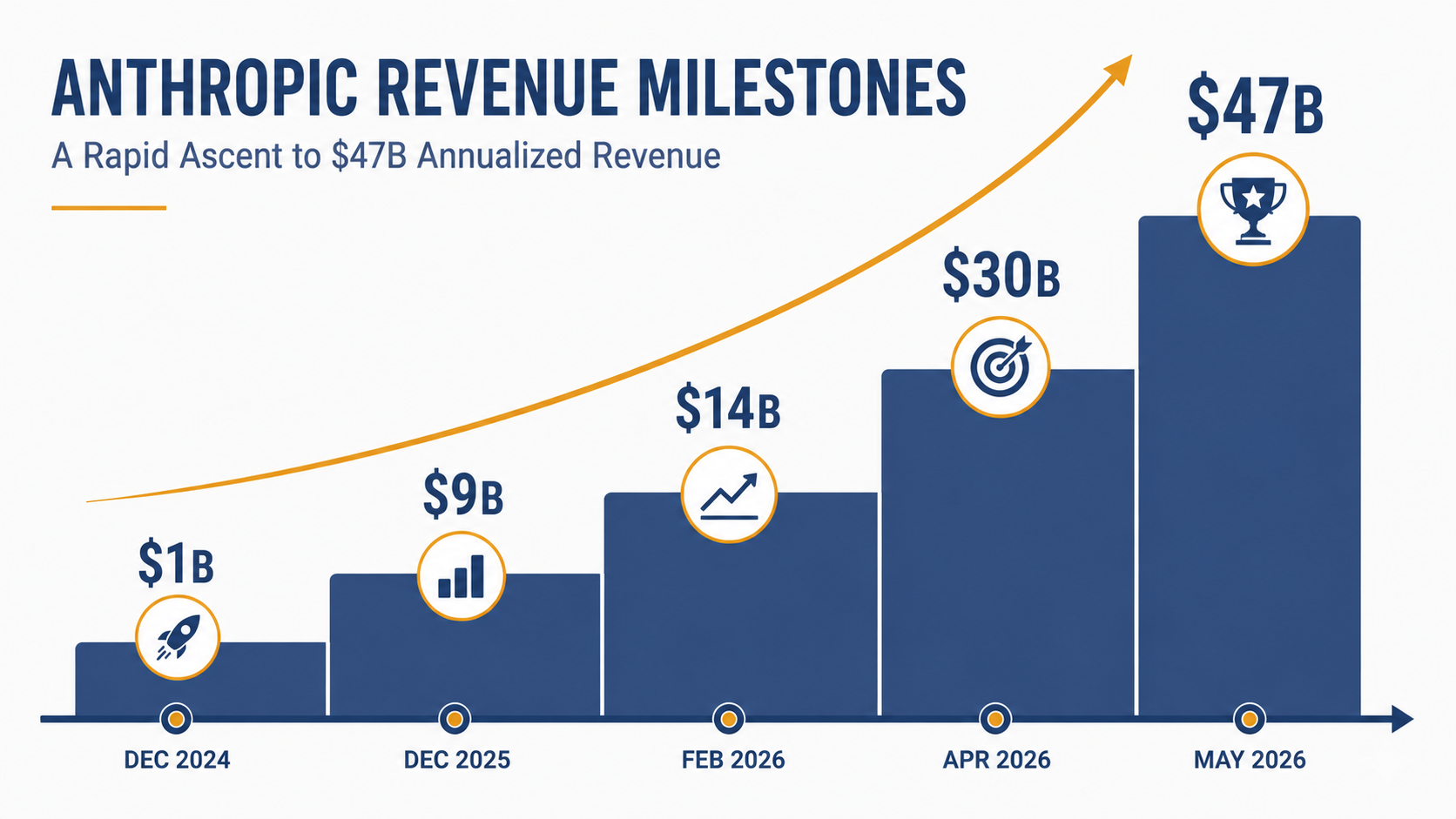
From $1B to $47B: the fastest enterprise revenue growth in software history.

Strengths of the Anthropic Ecosystem

Coding and Technical Excellence

Developers I work with treat Claude Code the way an earlier generation treated Stack Overflow. It’s the first thing they open in the morning and the last thing they close at night. The average developer using Claude Code now spends 20 hours a week working with it, according to Anthropic. At Anthropic itself, the majority of code is now written by Claude Code.

The product generates over $2.5 billion in run-rate revenue on its own. Business subscriptions have quadrupled since the start of 2026. Weekly active users doubled since January 1. Unlike autocomplete-style coding assistants, Claude Code handles entire workflows: implementing features, debugging, refactoring, writing tests, and deploying. Four percent of all public GitHub commits are now authored by Claude Code. Projections put that at 20% by year-end.

For small businesses that rely on custom software, automation scripts, or web applications, this matters. Claude Code can compress development timelines and costs in ways that directly affect the bottom line.

The Model Context Protocol: Connective Tissue for the Whole Industry

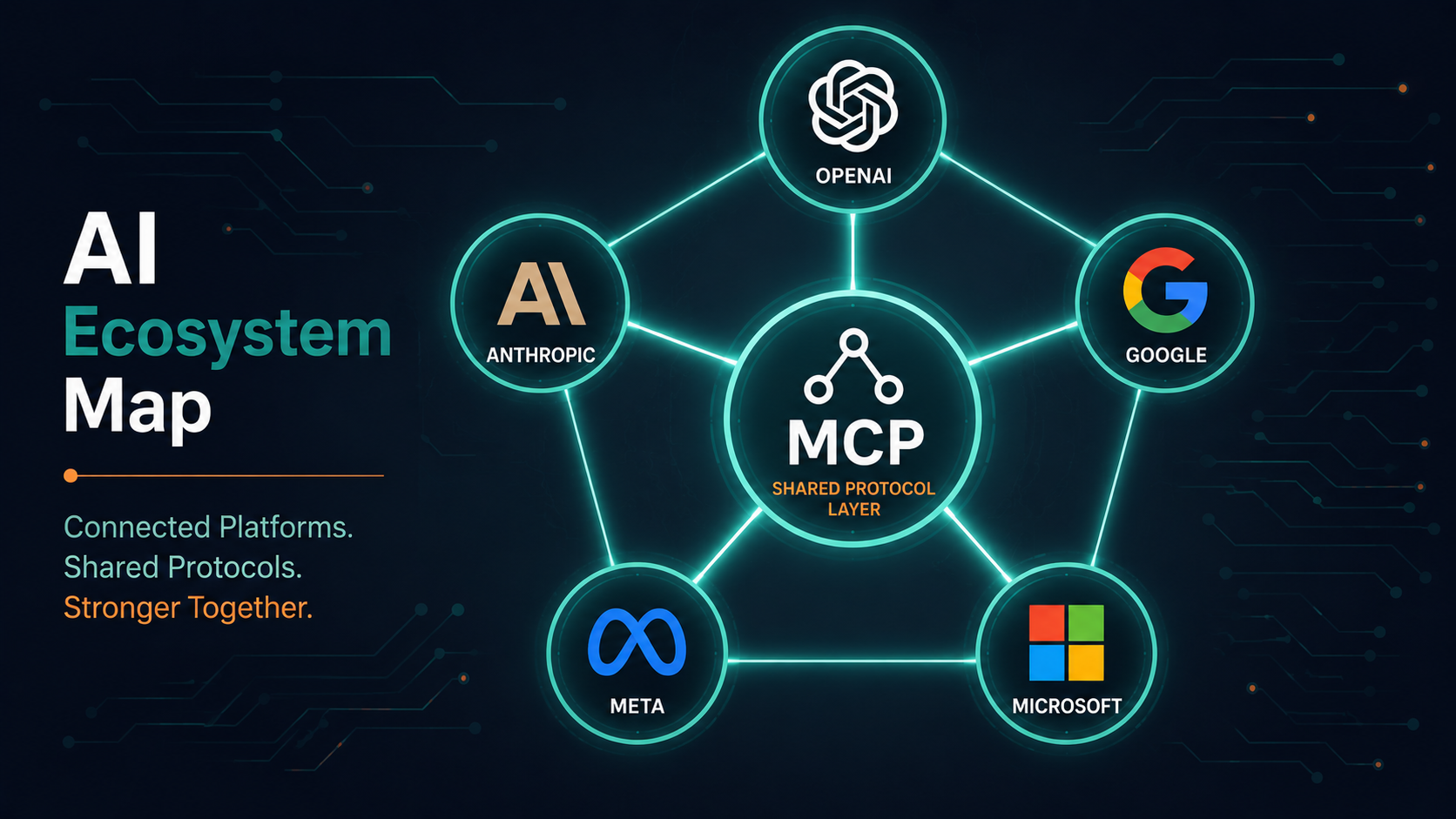
The contribution from Anthropic that might matter most for your business isn’t a model. It’s the Model Context Protocol, or MCP. Think of it as a universal adapter that lets AI models connect to external tools, databases, and APIs in a standardized way. Anthropic built it, then gave it away to the Linux Foundation’s Agentic AI Foundation.

As of early 2026, there were over 10,000 active public MCP servers and the SDK was being downloaded 97 million times a month. OpenAI adopted it. Google adopted it. Microsoft adopted it. When OpenAI plugged MCP into ChatGPT’s apps feature, it stopped being Anthropic’s protocol and became the industry’s.

For business owners, MCP means that tools built on Claude can also work with other AI platforms. It reduces vendor lock-in risk and increases the long-term value of any integration you build today.

MCP: the open protocol connecting AI ecosystems, built by Anthropic.

Safety and Trust as Business Differentiators

Anthropic’s Constitutional AI framework trains models using explicit ethical principles rather than relying solely on human feedback. Claude runs in sandboxed environments with structured safety levels. For businesses in regulated industries like healthcare, legal, and finance, these aren’t abstract philosophical positions. They’re practical requirements.

The company’s stance on safety was tested publicly in early 2026, and I think how they handled it tells you a lot about who they are as an organization. The Pentagon asked Anthropic to remove restrictions on mass domestic surveillance and autonomous weapons from their acceptable use policy. Anthropic refused. The result was a supply chain risk designation, the first ever applied to an American company (I’ll cover the business implications of that below). But the refusal itself demonstrated that Anthropic’s safety commitments aren’t marketing language. They held the line when it cost them real money.

Multi-Cloud Availability

Claude is the only frontier AI model available across all three major cloud platforms: AWS Bedrock, Google Cloud Vertex AI, and Microsoft Azure Foundry. For enterprises with existing cloud commitments, this means you can access Claude without switching infrastructure or renegotiating contracts. That flexibility is rare in this market and it matters more than most comparison charts give it credit for.

Weaknesses: Where the Anthropic Ecosystem Falls Short

Consumer Reach and Brand Awareness

Claude had roughly 19 million users in the third quarter of 2025. ChatGPT had 900 million weekly active users by February 2026. That gap is enormous. For small businesses whose employees are already comfortable with ChatGPT, introducing Claude means a change management challenge. Your team needs to learn a new interface, understand different capabilities, and adjust their habits. The switching cost isn’t monetary. It’s behavioral. And behavioral switching costs are often the hardest to overcome.

Pricing Complexity

Claude Pro costs $20 per month for individual users, comparable to ChatGPT Plus. Claude Max ranges from $100 to $200 for heavy users. Enterprise pricing is custom. But the primary revenue driver is API usage billed per token, which creates variable costs that are difficult for small businesses to predict. A company processing large document volumes through the Claude API could see monthly bills that fluctuate significantly. For budget-conscious businesses, that unpredictability is a real concern.

Evaluating the Anthropic ecosystem: strengths on one side, risks on the other.

The Pentagon Designation

This one deserves careful attention. In July 2025, Anthropic and the Pentagon signed a contract making Claude the first frontier AI model approved for use on classified networks. The Pentagon agreed to Anthropic’s acceptable use policy as part of the deal. Later, the Department of Defense asked Anthropic to waive restrictions on mass domestic surveillance and autonomous weapons. Anthropic said no.

On February 27, 2026, President Trump directed all federal agencies to stop using Anthropic’s technology. Defense Secretary Hegseth designated the company a supply chain risk. The formal notification came March 3. Anthropic filed two federal lawsuits on March 9. An appeals court denied a temporary block in April, but a separate federal judge in San Francisco granted a preliminary injunction against the broader federal ban.

Anthropic is the first American company ever to receive this designation, which was traditionally reserved for foreign adversaries. Over 100 enterprise customers reached out to Anthropic about the impact. The company’s court filings estimate the designation could cost billions in lost revenue.

For most small businesses, this is irrelevant. For defense contractors, government-adjacent businesses, and companies that serve federal clients, it introduces compliance uncertainty that you need to evaluate with counsel.

Is the Anthropic Ecosystem Right for SMBs?

The honest answer: it depends on the sophistication of your AI needs.

For business owners who need a general-purpose AI assistant for everyday tasks like email, brainstorming, and light research, Claude Pro is excellent and worth evaluating against ChatGPT. The experience is polished but less feature-rich than ChatGPT’s broader ecosystem of image generation and third-party plugins.

For businesses that need precision in coding, document analysis, structured writing, or enterprise integration, Claude is the current leader. The quality gap in professional-grade tasks is measurable and meaningful. Companies in healthcare, legal, finance, and technology are choosing Claude at disproportionate rates for exactly this reason.

Claude is not the AI your employees will ask for by name. It’s the AI your operations team will recommend after evaluating what performs best.

My practical recommendation for small businesses considering Anthropic: start with Claude Pro for one or two specific high-value use cases, such as document analysis or code generation, rather than attempting a wholesale platform migration. Measure the quality difference against your current tool. If the improvement justifies the cost, expand from there.

When to choose Claude over ChatGPT for your business.

What to Watch for the Rest of 2026

Three things will determine whether Anthropic’s trajectory holds. First, the IPO. Filing the S-1 on June 1 with an October target means the next four months will pressure-test whether the revenue growth can survive public market scrutiny. A $965 billion private valuation sets expectations that leave no room for stumbles.

Second, profitability. Multiple sources report that Anthropic expects its first operating profit in Q2 2026. If confirmed, it would make Anthropic the first major frontier AI lab to achieve profitability while still growing at this scale. That changes the entire financial narrative around the company.

Third, the Pentagon situation. Whether the designation escalates or resolves, and what precedent it sets for AI companies that refuse government requests to weaken safety measures, will shape the regulatory landscape for years.

The Anthropic ecosystem is not for everyone. But for businesses that prioritize precision, safety, and enterprise-grade performance over consumer familiarity, it represents the strongest option available right now. And at the rate it’s growing, the gap between “enterprise favorite” and “everyone’s default” may be closing faster than most people expect.

Good decisions start with good information. Galyx™ is built for the business owner who knows AI matters and needs a technology partner to guide them through it.

Register at Galyx.com for more insights and guidance.

Share
George Papazian
About the author
George Papazian
Founder & AI Strategy Consultant, Galyx

30+ years of research strategy on projects for Oracle, Cisco, PayPal, and Walmart — now helping small businesses adopt AI that actually delivers.

More about George →
Related posts

Keep reading